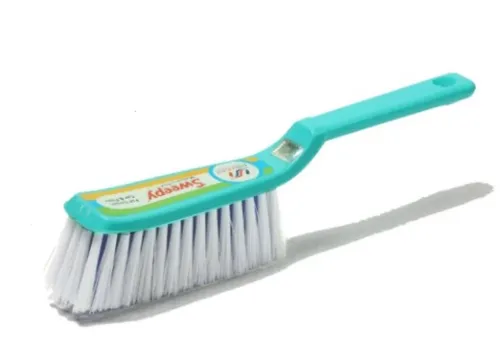
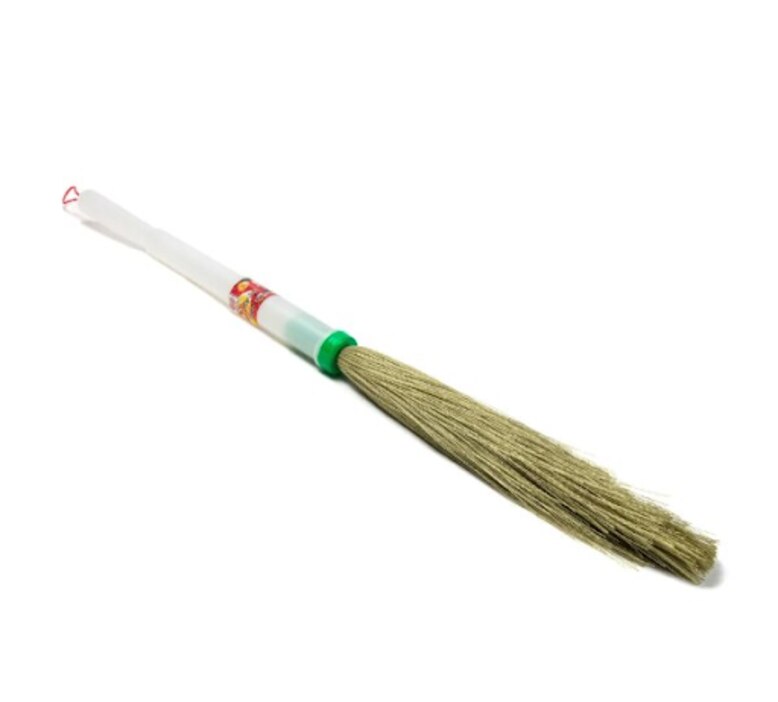
A low quoted price does not tell you whether a broom supplier can deliver consistent stock, survive a repeat-order cycle or produce a tool suited to your customers’ floors. By the end, you will have a practical way to compare suppliers, calculate landed cost, specify performance and approve the first production lot.
Key takeaways
- Check capacity for five repeat orders, including handles, blocks, filaments and packaging.
- Calculate landed cost with freight, tax, storage and handling included.
- Match broom construction to debris type, floor surface and cleaning method.
- Approve samples and a trial order before committing to full-volume supply.
Can the supplier fulfil your next five orders, not just the first one?
A first shipment proves very little. A broom supplier can have enough finished stock for one large order yet lack the filament, handles, blocks or packaging needed to repeat it next month. Assess the wholesale broom supplier against your next five orders, not its best dispatch.
Ask for written figures for:
- Current finished stock by SKU, carton quantity and available-to-promise units
- Production capacity per month for each required broom, separate from total factory output
- Standard lead time, dispatch time and delivery coverage for your locations
- Minimum order quantity, mixed-SKU rules and whether carton quantities must be fixed
- Raw-material availability, including handles, filaments, blocks and packaging
- Production dates, lot identification and the process for reporting delays or shortages
Do not accept “we can supply regularly” as evidence. Request recent order-fulfilment records showing quantities ordered, quantities shipped, promised dates and actual dispatch dates, with customer details removed. A factory visit, live video inspection or production schedule can also expose whether the claimed production capacity belongs to the exact broom you plan to buy.
Place a small trial order, then agree a reorder calendar for the next four deliveries. The broom manufacturer should state how it will handle a stockout, rejected lot, transport disruption or sudden demand increase. Reserve capacity in writing if missed delivery would empty your shelves or interrupt a cleaning contract.
What will each broom cost after freight, tax and storage?
Compare quotes on landed cost, not the broom wholesale price. Calculate: (unit price × quantity) + GST + packaging + loading + freight + delivery charges + expected storage cost, then divide by saleable units. Add a breakage allowance when the supplier does not replace transit-damaged stock.
| Charge | What to request | Why it changes the comparison |
|---|---|---|
| GST | Tax rate and whether the quote is before or after GST | A low pre-GST price can appear cheaper than an all-inclusive quote |
| Freight and delivery | Origin, destination, transport mode, fuel surcharge and unloading fees | Long handles and remote delivery can raise the final amount |
| Packaging and loading | Carton type, packing fee, loading fee and pallet charge | Nested brooms reduce carton cube; separate handles increase it |
| Storage | Carton dimensions, gross weight, units per carton and your monthly storage rate | Bulky stock ties up warehouse space after purchase |
| Damage and shortages | Replacement terms and claim deadline | Unreplaced breakage increases your effective unit cost |
Ask every supplier, including Unique Trading Company, to quote the same quantity and delivery address. Compare both a full-carton order and a mixed SKU order, because a broom MOQ of 100 pieces may apply per SKU, while split cartons create extra packing and freight charges.
Confirm thread form and dimensions, ferrule or socket geometry, handle length and replacement availability across every SKU. “Standard threaded handle” is not a specification. Use the landed cost per saleable broom, not the invoice total, to decide.
Related products
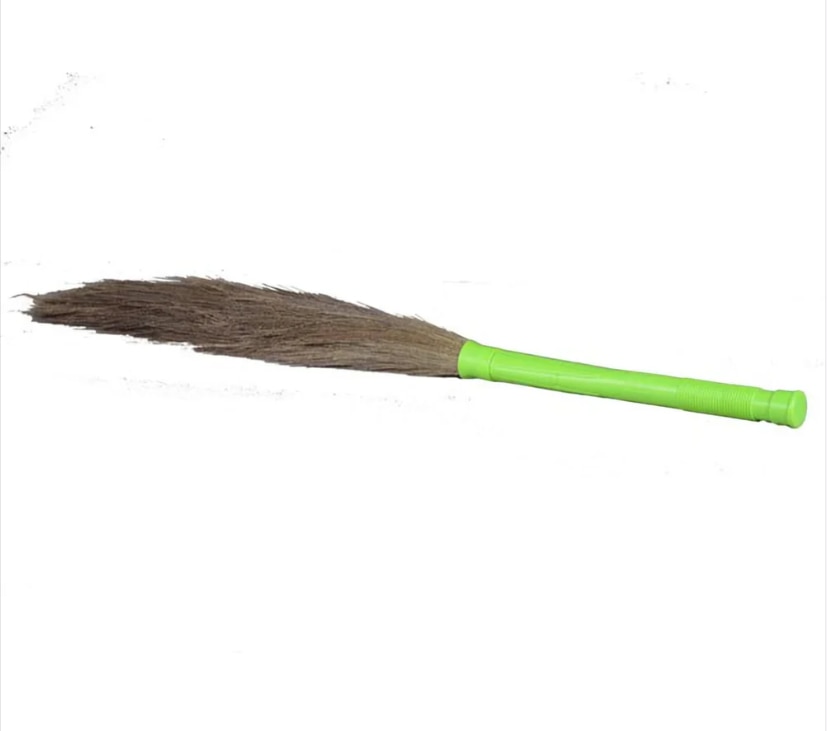 | Grass Broom Approx. Price: Rs 86 / PieceGet Latest Price Product Details: Minimum Order Quantity 100 Piece Handle Material Plastic Material Grass... View product → |
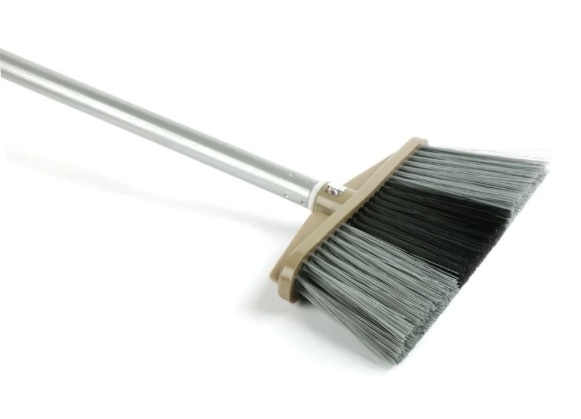 | Plastic Brooms Approx. Price: Rs 142 / PieceGet Latest Price Product Brochure Product Details: Minimum Order Quantity 100 Piece Handle Material Powder Coated Broom... View product → |
Which broom construction matches the debris, floor and cleaning method?
Match the broom to the debris and surface before comparing price. Fine dust on tile needs close, flexible contact; gravel on rough cement needs stiffness and clearance. Your commercial broom specification should state the debris, floor, wet or dry use, sweep width, service life, washing method and chemical exposure.
| Option | Best match | Limitation |
|---|---|---|
| Grass | Dry dust on smooth tile and indoor floors | Loses shape when soaked; unsuitable for gravel |
| Coconut-fibre | Rough cement, concrete, outdoor debris and coarse soil | Too abrasive for delicate tile; dries slowly after washing |
| Soft nylon | Tile, sealed floors, hair and light dust | Bends under heavy grit and rough concrete |
| Stiff plastic | Concrete, wet floors, outdoor debris and low-pile carpets | Can scratch sensitive finishes and miss very fine dust |
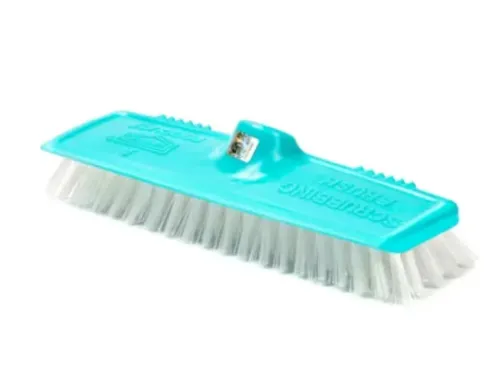
| Floor-brush | Wet floors, grout lines and scrubbing with detergent | Not a substitute for a dry dust broom |
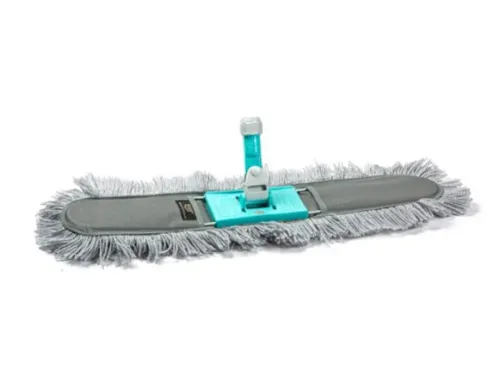
| Dust-mop | Fine dust and hair on large, smooth, dry floors | Poor on rough cement, standing water and carpets |
| Push-broom | Fast collection across outdoor concrete and rough cement | Requires storage space and leaves fine dust behind |
Compare broom bristle types by filament diameter or denier, not material name alone. Request crimp, staple length, trim length and fill density. Flagged bristles improve fine-dust pickup through split tips but retain soil and wear faster; straight, unflagged filaments rinse and dry more effectively. Ask whether the handle and block tolerate washing and disinfectants.
What specification proves that one production lot matches the next?
A repeatable broom specification must set numeric tolerances, test methods and an agreed sampling plan before production starts. Record the approved golden sample, SKU, lot number and manufacturing site; artwork approval alone does not prove batch consistency.
Require these items in the incoming inspection checklist:
- Overall length, sweep width, block length, width and height: state millimetre tolerances.
- Trim length and uniformity, handle straightness, filament count or fill density, filament diameter or denier, crimp and staple length.
- Visible defects: no cracked blocks, loose handles, exposed staples, excessive shedding, stained fibres or damaged packaging.
- A broom durability test with a defined load, stroke count, surface and pass criteria for handle joints, block attachment, filament loss and permanent bending.
| Control point | Evidence to require | Acceptance decision |
|---|---|---|
| Lot inspection | ANSI/ASQ Z1.4 sampling plan, lot size, AQL and inspection report | Hold or reject stock that exceeds the agreed defect limit |
| Material change | Written notice for resin, pigment, filament geometry, adhesive, block material, handle source or factory location | Reapprove the sample before shipment |
| Regulatory claim | Exact antimicrobial wording, treated-article basis and required FIFRA documentation; for EU sales, SKU-specific REACH material declaration and SCIP status where applicable | Do not approve unsupported claims |
| Traceability | Batch code, production date, retained golden sample and test records | Quarantine stock that cannot be linked to its records |
Test filament diameter and fill density, not just “PET” or “natural fibre.” A small change can alter stiffness, debris pickup and product life. Make the supplier sign every revision and notify you before manufacture.
How can you approve a supplier without risking a full purchase order?
Approve a supplier in stages, not with a full purchase order. A controlled broom sample order, followed by a limited trial and repeat-order check, gives your broom supplier evaluation evidence without exposing your inventory budget.
1. Request one sample from each proposed SKU, including the retail carton, inner packaging, labels and pallet configuration. For private-label brooms, approve the artwork separately from the product: retain a signed golden sample showing filament fill, block construction, handle source and country of manufacture.
2. Test every handle connection. Record thread form and dimensions, ferrule or socket geometry, handle length and material, then check interchangeability across SKUs. Run filament pull-out, handle-to-block torque, ferrule-separation and repeated sweeping tests, including after wetting and drying.
3. Ask for packed dimensions, gross weight, units per carton, cartons per pallet and storage limits. Trial the proposed stacking arrangement and confirm protection from moisture, crushing and heat before accepting the carton design.
4. Obtain SKU-specific compliance documents, not a generic claim. For antimicrobial wording, request the exact claim language and applicable FIFRA treated-article or EPA documentation; for EU sales, request a current REACH material declaration and SCIP information when required.
5. Place a small mixed-SKU trial order, inspect the delivery, then repeat it after the quoted lead time. Put transit-damage replacements, defective-unit credits, response times and spare-handle availability in writing.
Scale only when the sample, trial and repeat order match. That record is your protection against packaging drift, hidden compatibility costs and weak supplier continuity.
Frequently asked questions
How can I tell whether a broom supplier can fulfil repeat orders?
Ask for a supply plan covering your next five orders, including monthly capacity and availability of filament, handles, blocks and packaging. Check lead times, minimum order quantities and backup arrangements for each component.
What costs should I include when comparing wholesale broom suppliers?
Compare the landed cost per broom after adding the purchase price, freight, insurance, taxes, unloading, storage, handling and expected wastage. A lower unit price can become more expensive after delivery and storage costs.
How do I choose the right broom construction?
Match the bristle or filament stiffness, head shape, handle and block construction to the debris, floor surface and cleaning method. Soft filaments suit fine dust and sensitive floors, while stiffer designs suit heavier debris and outdoor surfaces.
What quality specifications help keep production lots consistent?
Put measurable specifications in the purchase agreement, including broom length, head width, filament material and diameter, filament trim length, handle material, block dimensions, weight tolerance, colour and packaging. Request pre-shipment samples and lot records.
How can I approve a broom supplier without placing a full-volume order?
Request product samples, verify the specification, place a limited trial order and inspect the delivered lot. Test sweep performance, handle strength, attachment security, packaging and defect rates before increasing order volume.
Related products
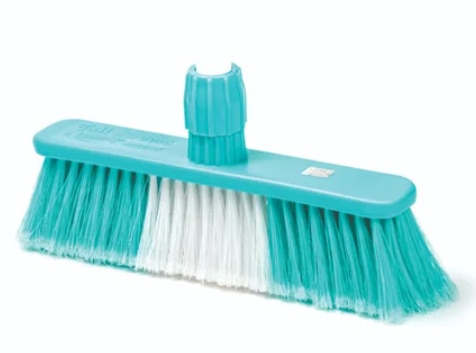 | Plastic Brooms Plastic Push Hard Broom, For Floors Approx. Price: Rs 200 / PieceGet Latest Price Product Brochure Product Details: Minimum Order Quantity 100 Piece Material Plastic Handle Material... View product → |
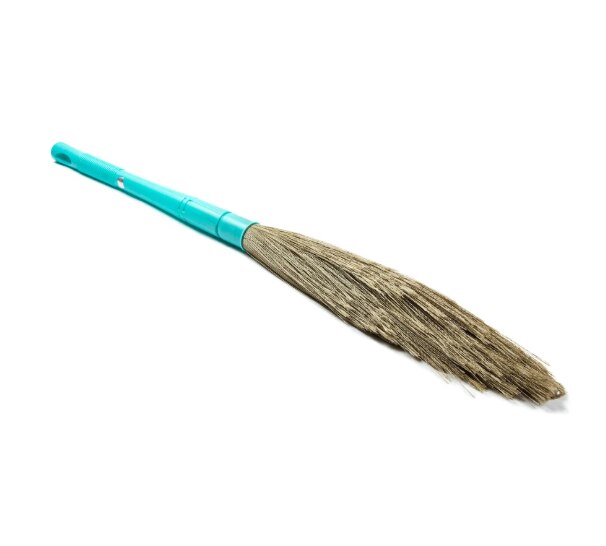 | Plastic Brooms Approx. Price: Rs 112 / PieceGet Latest Price Product Details: Minimum Order Quantity 100 Piece Handle Material Plastic Brand Unique Broom Head... View product → |
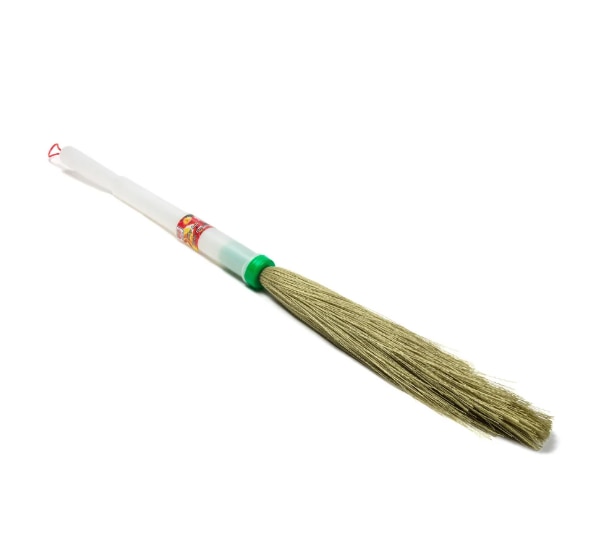 | Plastic Brooms Silky Soft Nylon Broom, For Cleaning Approx. Price: Rs 100 / PieceGet Latest Price Product Details: Handle Material Plastic Broom Head Material Nylon Usage/Application For... View product → |
 | Unique Celling Broom Approx. Price: Rs 140 / PieceGet Latest Price Product Brochure Product Details: Minimum Order Quantity 100 Piece Usage/Application Cleaning Broom... View product → |
Keywords