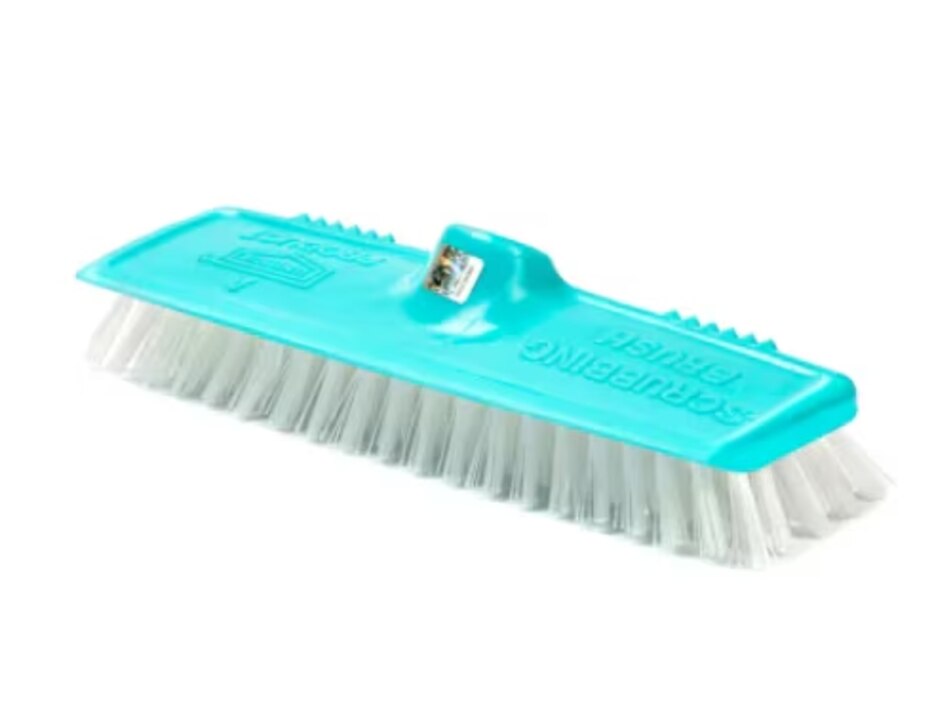
Stubborn floor soil rarely yields to extra force alone: loose grit, dried grease, soap scum, mineral deposits and mould each need a different preparation and cleaning approach. You will learn how to loosen the soil, choose a safe brush, scrub grout without redistributing dirty water and recognise when brushing is the wrong remedy.
Key takeaways
- Dry-sweep first to remove grit that can scratch flooring.
- Use soft bristles on glossy tile and stiffer bristles on durable joints.
- Scrub edges toward the centre and remove dirty water as you work.
- Match cleaner chemistry to grease, scale, mould or damaged grout.
Loosen the soil before the brush touches the floor
A brush works best after grit has been removed and the soil has softened. Dry sweeping before scrubbing prevents sand and loose particles from becoming cutting media under the bristles, which can scratch glossy tile, polished stone and resilient flooring.
- Sweep or vacuum the entire area, then remove loose debris from grout lines and edges.
- Check the cleaner label and mix the stated dilution with warm water. The practical water temperature for floor cleaning workouts is about 35–45°C: warm enough to improve soil release, but not hot enough to damage finishes or create a vapour hazard.
- Follow the detergent application order: apply the diluted solution to a small section, spread it evenly, and keep the surface wet without creating puddles. Use a neutral or mildly alkaline cleaner on cementitious grout; avoid acid unless the floor manufacturer specifically permits it.
- Allow 5–10 minutes of wetting time, or the label’s stated dwell time. Do not let the solution dry; dried detergent leaves residue and makes the next pass harder.
- Scrub with short, overlapping passes and moderate pressure. Several controlled passes loosen more soil than one forceful stroke, which splays bristles and raises the risk of scuffing nearby surfaces.
Control the volume so grout and floor joints do not become saturated. Rinse or recover dirty solution where needed, then leave traffic areas dry. Test the dilution, dwell time and pressure on an inconspicuous patch before treating the whole floor.
Match bristle aggression to the floor and the joint
Choose the least-aggressive bristle that reaches the joint profile and removes soil. A hard brush is not automatically more effective: on glazed surfaces, polished stone or vinyl, stiff filaments can scratch, dull the finish or spread fine grit.
| Surface or joint | Starting bristle | Safe application |
|---|---|---|
| Sealed ceramic tile | Soft to medium | Use medium bristles only after a hidden-area test; avoid forcing them across the glaze. |
| Porcelain tile grout brush choice | Medium, angled and resilient | Choose a narrow head that enters recessed joints; use hard bristles only on sound, unsealed cement grout. |
| Natural stone, including marble, limestone and travertine | Soft | Keep pressure light; abrasive filaments can leave a dull patch. |
| Concrete or textured quarry tile | Medium to hard | Reserve hard bristles for durable, unpolished surfaces after checking for loose aggregate. |
| Vinyl, painted or coated floors | Soft | Stop if the coating turns cloudy, lifts or shows linear scratches. |
Test the complete method, not just the brush. On an inconspicuous patch, use the intended dilution, dwell time, pressure and number of passes, then rinse and let it dry. Reject the combination if you see colour transfer, grout erosion, gloss change, staining or shed bristles.
For a broad floor, straight densely packed bristles cover quickly; an angled, slightly more open head penetrates uneven grout instead of bridging it. Unique Trading Company’s medium-bristle UB03 can serve as a starting point, but approve it by this test rather than by the label alone.
Medium bristles versus hard bristles is a wear decision, not a claim that stronger always cleans better.
Related products
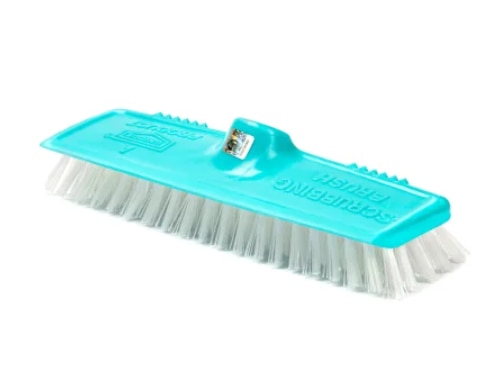 | Plastic Brooms Approx. Price: Rs 146 / PieceGet Latest Price Product Brochure Product Details: Bristle Stiffness Medium Usage/Application For Brooming, Scrubbing &... View product → |
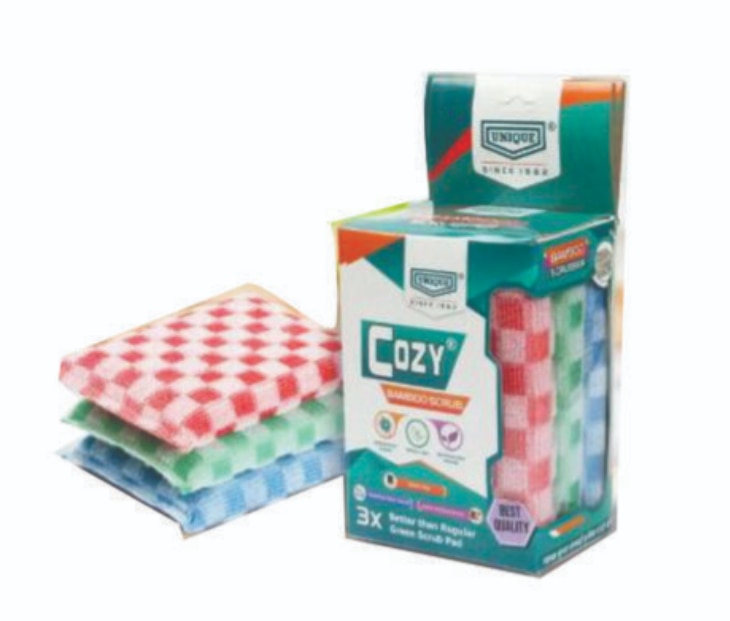 | Unique Scrubber 53 INR/Pack Unique Scrubber at Unique Trading Company Unique Trading Company proudly presents the Unique Scrubber, a high-quality cleaning solution... View product → |
Scrub grout, corners and edges without spreading dirty water
Use light, controlled pressure for cleaning grout joints: press until the bristles bend into the joint, not until grout displaces or the tile surface scratches. Two or three slow passes usually outperform one forceful pass because excess pressure pushes soil deeper and wears soft grout.
1. Limit the solution to the working area. Apply enough to keep the joint wet, but stop before detergent forms a puddle. Start at the far edge and move toward your collection point, so dirty liquid does not flow across cleaned flooring.
2. Keep the brush aligned with the joint. Use short strokes along the grout line, then make one crosswise pass only where soil remains. For grout corners and the wall-floor junction, use the narrow edge or tip of the head rather than forcing a broad brush into the angle.
3. Rinse the brush in a separate container of clean water after each small section. Do not dip a dirty brush back into the detergent bucket; that spreads soil through the next area.
4. Recover rinse water immediately with a wet vacuum, absorbent mop or wrung cloth. Leave no saturated grout, detergent film or standing water in a traffic path.
A stair treads cleaning brush with an angled head reaches nosings and tight corners without flooding the tread. Work one tread at a time, keep runoff off the riser, and dry each completed section before opening the stairs to traffic. Stop if extra passes expose aggregate, loosen grout or change the floor’s sheen.
Use the right chemistry for grease, scale, mould and damaged grout
Choose chemistry by the soil, not by how hard the brush feels. Grease needs surfactants or alkalinity; scale needs controlled acid; mould needs soil removal before disinfection. Identify the tile and joint material first, because a product safe for porcelain can damage limestone, marble, travertine or cement-based grout.
| Soil | Suitable solution | Risk or limit |
|---|---|---|
| Grease | Mildly alkaline cleaner with surfactants | Rinse fully; stronger brushing will not fix an unsuitable chemical |
| Scale or efflorescence | A labelled descaler for the surface; use a neutral cleaner for salt deposits when specified | Do not use an acidic descaler on natural stone or cementitious grout |
| Mould staining | Detergent and mechanical cleaning, followed by a labelled disinfectant where required | Bleach and grout are not a soil-removal method; organic soil consumes chlorine |
| Routine cement grout | Neutral grout cleaner or mildly alkaline cleaner | Repeated acid exposure can dissolve binder, widen pinholes and increase porosity |
| Grout haze | A product specified for grout haze and the tile material | Do not treat it like grease or scrub harder by default |
Keep acidic products off natural stone and cement-based joints unless the manufacturer expressly approves them. Use ventilation, gloves and the product’s stated dilution and dwell time.
Stop brushing when grout turns powdery, flakes, recedes or exposes tile edges. Cracks, missing joint material, persistent dark lines after cleaning, or a loose tile indicate repair work, not more pressure. Stiff bristles can scratch glazed tile, polished stone or vinyl; visible gloss loss is a damage signal.
Decide when a hand brush is enough and keep it hygienic
A hand brush is enough for grout lines, corners, stair nosings and small heavily soiled areas where you need directed pressure. Choose the brush handle length and grip for the task: a long, non-slip handle protects your back on floors, while a short grip gives control around edges.
A hand brush versus scrub pad is slower on broad areas but reaches recessed joints better.
| Option | Strength | Best use |
|---|---|---|
| Hand brush | Precise pressure and narrow access | Grout, edges, corners and spot soil |
| Scrub pad | Even contact over a flat area | Open floors and finish-safe light agitation |
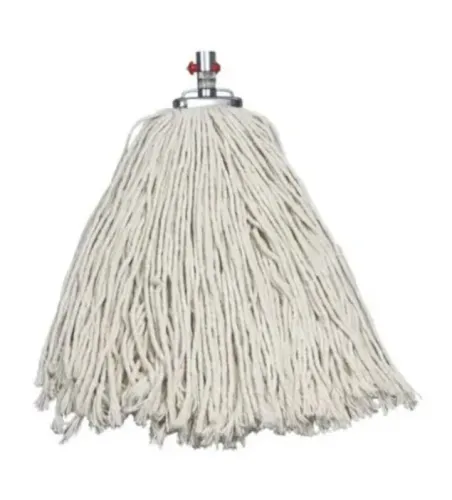
| Mop | Spreads and collects solution | Routine soil after loose dirt is removed |
| Powered floor scrubber | Fast agitation and solution recovery | Large, open floors with suitable machine access |
Select straight, dense bristles for broad hard floors and an angled or flagged head for joints. Set aside tools by zone: toilet, drain and heavily contaminated-floor brushes must not enter food-contact, clinical or general-cleaning areas without an approved decontamination process. Use colour coding and labels to prevent cross-contamination cleaning tools.
- Rinse soil from the brush immediately after use.
- Wash with detergent, then disinfect when the procedure requires it; keep the disinfectant surface wet for its label contact time.
- Rinse chemical residue, shake out water and hang the brush bristles downward in a ventilated area.
- Inspect after every use and replace loose, bent or permanently stained bristles.
- Schedule inspection daily in institutional work and deep cleaning weekly, or sooner after contamination.
Do not leave brushes soaking or standing in dirty water. Control solution volume, recover rinse water and leave traffic areas dry.
Frequently asked questions
Why should you loosen floor soil before scrubbing?
Dry-sweep first to remove grit, then soften stuck-on soil before the brush touches the floor. This reduces scratching from sand and loose particles.
How do you choose bristles for tile and grout?
Match bristle stiffness to the surface: use softer bristles for glossy tile and more aggressive bristles for durable grout and heavily soiled floors.
How can you scrub grout and edges without spreading dirty water?
Work in small sections, scrub edges and corners toward the centre, and remove the loosened dirty water before moving to the next area.
Which cleaner should you use for grease, scale, mould and damaged grout?
Choose a degreaser for grease, an acidic descaler for mineral scale, a suitable mould cleaner for mould, and a gentler product around damaged grout.
When is a hand scrubbing brush enough?
A hand brush is enough for small areas, grout lines, corners and spot cleaning. Use a larger tool when the floor area makes hand scrubbing slow or inconsistent.
Related product
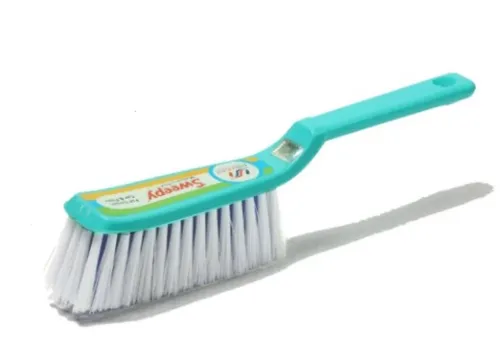
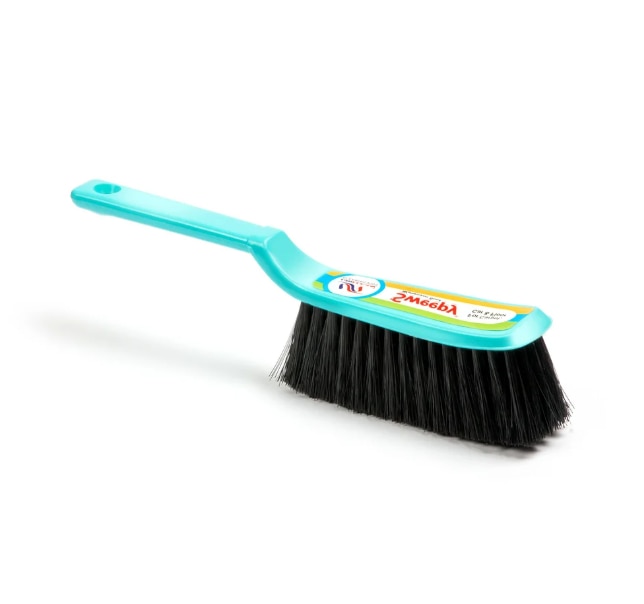 | Magic Brush Sweepy Soft Plastic Carpet Brush Approx. Price: Rs 98 / PieceGet Latest Price Product Brochure Product Details: Minimum Order Quantity 100 Piece Material Plastic Usage/Application... View product → |
Keywords