Fine dust settles across corridors, halls and work areas faster than a small cleaning tool can handle efficiently. By choosing the right head width, preparing the textile correctly and using overlapping passes toward the exit, you can collect settled dust without redistributing it or exhausting the operator.
Key takeaways
- Use dust mops on smooth, sealed floors with settled dust.
- Keep the mop head in contact with the floor as you move.
- Choose a narrow head for congestion and a wider head for open halls.
- Vacuum or wet-clean when dust is embedded, airborne or stuck to soil.
What Fine Dust Can a Dust Control Mop Collect?
A dust control mop collects loose, settled dust from smooth, sealed hard floors when its yarn or textile head stays in direct contact with the surface. It is a surface-collection tool, not an air filter: it will not reliably capture airborne dust, particles embedded in grout, or soil lodged in textured and porous flooring.
- Use it for dry, loose particulate on a dry floor. Fine dust is retained through fibre contact and mechanical entrapment, so a dry mop works best when the surface has no sticky residue.
- Do not drag a dry head across grease, dried spills or wet contamination. Spot-clean or damp-clean those areas; otherwise the mop creates streaks and soils its textile quickly.
- Use wet cleaning or a properly functioning HEPA vacuum when dust is continuously generated or presents an occupational hazard, especially respirable crystalline silica. OSHA identifies wet sweeping and HEPA-filtered vacuuming as alternatives to dry sweeping in its silica standard.
- Keep the performance difference clear: a HEPA filter is rated to remove at least 99.97% of particles measuring 0.3 micrometres, while a mop depends on physical contact and how well its fibres retain soil. Rapid sweeping can put fine dust back into the air.
On textured flooring, grout and porous finishes, follow dust mopping with a method that reaches recesses. Choose the mop for surface dust, not hazardous airborne contamination.
How Should You Prepare and Move the Mop Across a Large Floor?
Use a clean, dry mop head for dry dust mopping unless the textile supplier or floor-care plan specifies a treatment. If the floor finish permits it, apply a dust-control treatment evenly and sparingly; do not soak the head before collecting fine dry dust.
1. Apply only enough treatment to support pickup. Excess oil or tackifier can leave a film, change slip characteristics and attract more soil, so match the treatment to the floor finish rather than adding more for a heavily loaded head.
2. Start at the farthest edge of the room and work toward the exit. This route prevents you from walking across cleaned lanes and carrying collected dust back over the floor.
3. Use straight-line pushing in continuous lanes, keeping the full mop surface flat against the floor. Make overlapping passes by about 10 to 15 centimetres, or roughly one-fifth of a narrow head, to prevent strips of missed dust.
4. Turn gradually at the end of each lane. Do not lift the head between passes, flick or snap it, or use rapid side-to-side sweeping; those movements create air currents that can release fine dust already collected.
5. Stop and service the head when it looks visibly loaded, leaves a dust trail or loses smooth floor contact. Continuing past that point can smear soil, reduce pickup and redistribute dust.
Which Mop Width Fits Corridors, Halls and Congested Areas?
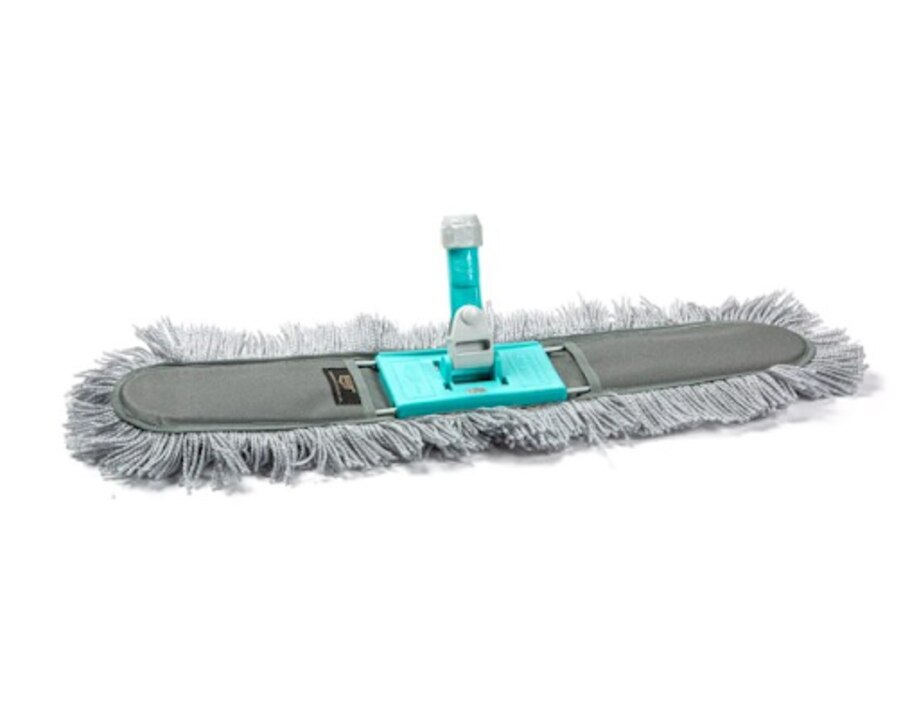
Choose the mop width from usable floor space, not nominal coverage. A 46 cm dust mop turns through doorways, furniture, queue barriers and narrow corridors with less repositioning, while a wider head loses time around obstacles.
| Option | Best fit | Trade-off |
|---|---|---|
| 46 cm dust mop | Corridors, doorways, furnished rooms and congested zones | More passes, but easier turning and tighter edge access |
| 60 cm dust mop | Open commercial floors, halls and moderate-width routes | Fewer lanes, with less clearance around fixtures |
| 62 cm dust mop | Hotel lobbies, airport lounges and unobstructed hospital floors | High open-floor coverage, but awkward in narrow aisles |
| Aisle-matched width | Warehouse routes between shelving | Must leave turning clearance without striking stock or racking |
A wide frame reduces passes on an open floor, but overlap, thresholds, edge work, pad changes and obstacles reduce its real productivity. A narrower frame takes more lanes yet wastes less time repositioning.
For hotel lobby cleaning, a 60 cm or 62 cm head suits open routes; use a smaller head where seating, counters or barriers interrupt the path.
Before comparing suppliers, ask for:
- Actual usable cleaning width, not only frame width
- Replacement-head availability
- Handle length and turning clearance
- Pad-change method
- Laundering requirements
Unique Trading Company can be included when you are sourcing separate formats for open floors and congested zones. Base the choice on route layout, clearance and cleaning workflow, not width alone.
Related products
 | Dust Control Mops Approx. Price: Rs 252 / PieceGet Latest Price Product Brochure Product Details: Color Blue Rod Material Plastic Type of Mop Head Cut End Mops Model... View product → |
 | Dust Control Mops Dust Control Mop 62cm (Synthetic Yarn) Approx. Price: Rs 450 / PieceGet Latest Price Product Details: Minimum Order Quantity 100 Piece Mop Head Material Cotton Yam Brand Unique... View product → |
How Do You Empty or Clean a Loaded Mop Without Releasing Dust?
Once a section is covered, treat the mop head as a dust container, not as a clean tool. Stop before the textile becomes overloaded: a saturated head can smear soil, lose floor contact and release dust when you turn.
1. Move a reusable head outdoors or to a controlled service area before emptying it. Shake it gently; do not snap or whip it. If outdoor shaking is not possible, use a vacuum designed for that dust type. Never blast the textile with compressed air.
2. Fold or roll the contaminated surface inward while removing the head. Put it in a closed laundry or waste container, and keep it away from clean pads to maintain dust containment and prevent cross-contamination.
3. Follow the textile supplier’s instructions for mop head cleaning. Wash a launderable dust mop separately from greasy loads and lint-shedding textiles. Do not use fabric softener: its residue can coat fibres and reduce soil retention.
4. Dry the head fully before reuse. Replace it when the fibres are flattened, permanently soiled or damaged, or when washing no longer restores its ability to hold dust.
5. Use disposable sheets when simple containment and lower cross-contamination risk matter most. Choose reusable launderable pads when the site has controlled collection, washing, drying and inspection; they reduce consumable waste.
When Should Dust Mopping Be Combined With Vacuuming or Wet Cleaning?
Use dust mopping as one stage in a floor-care sequence, not the sole response to every contamination. Vacuum or wet-clean where dust is continuously generated, particles are airborne, or the material presents a respiratory hazard.
1. Control the source before choosing a wider mop. Use HEPA vacuuming for fine hazardous dust when the vacuum is suitable for that material and its seals, hose and filter system are maintained without leaks. For respirable crystalline silica, use wet methods or HEPA vacuuming instead of dry sweeping where feasible.
2. Follow dust mopping on textured flooring, grout and porous finishes with a method that reaches recesses. The mop head cannot contact every depression, so settled dust will remain in the surface profile.
3. Spot-clean grease, dried spills and adhesive soil before or after dust-mopping. Dragging a dry head across sticky contamination creates streaks and soils the textile quickly; use wet cleaning where the residue needs moisture or detergent.
4. Inspect each completed section. A clean lane with no visible dust trail shows that the head is still collecting effectively. A dull film, streak or dust line calls for pad change or a different method.
5. Set a mop replacement interval from actual results, not building size. Record area covered per head, replacements and edge-work time; those figures reveal whether the head is overloaded before the route ends and provide a workable floor-care plan.
Frequently asked questions
What fine dust can a dust control mop collect?
It collects loose, settled dust from smooth, sealed hard floors. It does not reliably capture airborne dust or particles embedded in grout, textured flooring or porous surfaces.
How should you prepare and move a dust control mop across a large floor?
Prepare a clean mop head and keep it flat against the floor. Move in controlled, overlapping passes so dust stays gathered rather than being pushed into untouched areas.
Which mop width fits corridors, halls and congested areas?
Use a wider mop head for open halls and large unobstructed areas. Choose a narrower head for corridors, around furniture and other congested spaces.
How do you empty or clean a loaded mop without releasing dust?
Handle the loaded head gently and clean it in a way that prevents dust from becoming airborne. Follow the mop head’s care instructions before returning it to service.
When should dust mopping be combined with vacuuming or wet cleaning?
Add vacuuming when dust is airborne or trapped in edges and crevices. Use wet cleaning for adhered soil, and address embedded particles in grout or textured flooring with a suitable method.
Related products
 | Dust Control Mops Dust Control Mop Plastic Frame Approx. Price: Rs 252 / PieceGet Latest Price Product Brochure Product Details: Minimum Order Quantity 100 Piece Material Microfibre... View product → |
 | Unique Mop Approx. Price: Rs 146 / PieceGet Latest Price Product Details: Minimum Order Quantity 100 Piece Pole Material Galvanized Brand Unique... View product → |
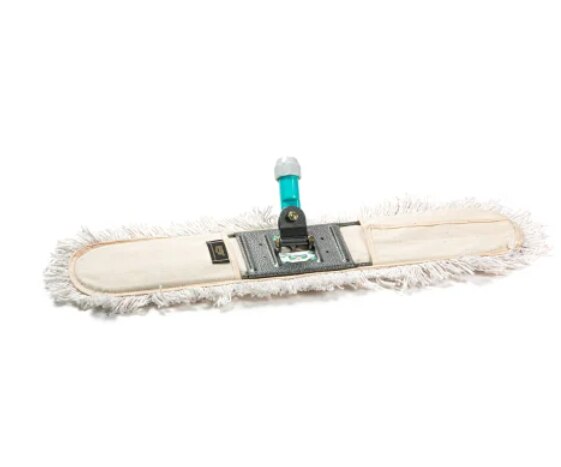 | Dust Control Mops Approx. Price: Rs 404 / PieceGet Latest Price Product Details: Minimum Order Quantity 100 Piece Mop Head Material Cotton Yam Brand Unique... View product → |