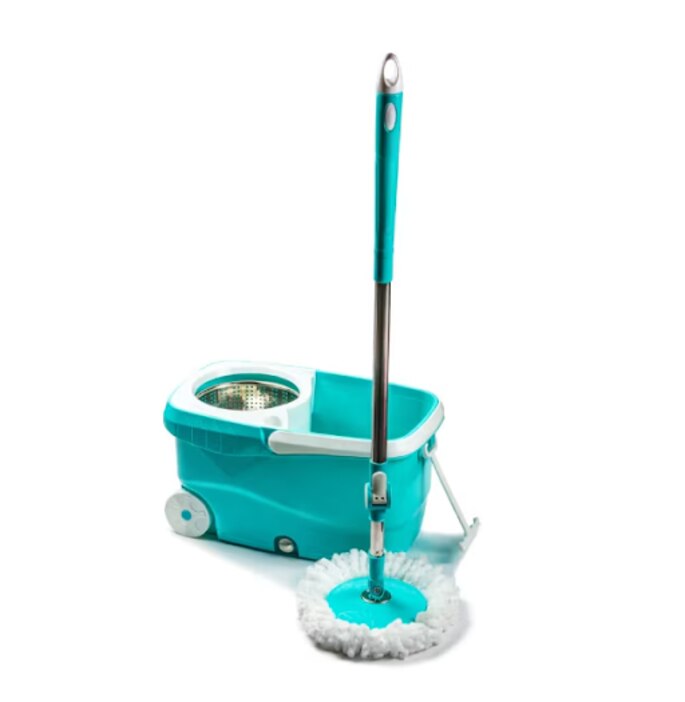
A wet mop becomes tiring when you repeatedly bend, squeeze fibres by hand and drag excess water across the floor. By using the Walk N Twist method correctly, you can control moisture, reduce hand contact with dirty water and choose a cleaning routine that suits each floor surface.
Key takeaways
- Keep bucket water below the spin basket to prevent splashing.
- Twist the mop to control moisture without bending or hand wringing.
- Use a damp mop for sealed floors and minimal moisture for wood.
- Rinse, dry and store the mop head to prevent odour and mildew.
How to Operate a Walk N Twist Mop Without Soaking the Floor
Fill a clean 5-litre bucket with the recommended cleaning solution, stopping at the fill line. If there is no line, use about 3 litres and keep the water below the spin basket; overfilling splashes dirty water during twisting and leaves less room for the mop head.
- Place the mop head in the solution and press it down until the fibres are fully wet. Lift it above the bucket and let excess water drain for a moment.
- Set the wet mop head squarely inside the spin basket. Keep the handle upright so the head does not catch against the basket rim.
- Twist the handle or operate the wringing mechanism with steady downward hand pressure. Use one spin for lightly damp cleaning, two spins for routine mopping, and three spins for a small spill that needs faster drying.
- Stop when the mop head feels damp rather than heavy and dripping. If water falls from it as you carry it, spin again.
- Lower the mop head flat onto the floor and clean in overlapping passes. The floor should show a thin wet film that starts disappearing quickly, not pools or visible trails.
- Return the head to the wash solution only when it needs rinsing. Once the solution looks visibly dirty, empty the bucket and prepare fresh solution; spinning cannot make contaminated water clean.
For a large spill, remove the bulk liquid and solid soil first. A saturated mop head mainly spreads dirty solution, even after repeated twisting.
How Twisting Reduces Bending and Hand Wringing
The twist mechanism makes the hardest part of wringing—squeezing water from a saturated head—less demanding and creates bending reduction because you do not have to crouch over the mop. Hands-free wringing means turning or working the handle while the mop head stays inside the basket, rather than using manual wringing on the wet fibres.
| Action | What becomes easier | Pressure still required |
|---|---|---|
| Positioning the head | You guide the head into the wringing chamber instead of lifting and squeezing it over the bucket | Use one hand to seat and align the head fully |
| Activating the twist | Rotation extracts water without direct contact with the dirty mop head | Apply steady hand torque; do not force a jammed or overloaded head |
| Keeping the bucket stable | You avoid leaning your body over the bucket | Press down on the handle, or use a foot on the bucket base if it shifts |
| Removing the head | Less lifting and squeezing is needed | Pull the handle upward and guide the head back to the floor |
The system does not remove all physical effort. Your hand still controls the handle, supplies the twisting force and holds the mop upright. A foot-operated design may require downward foot pressure on its pedal; another design may need your foot only to stop the bucket moving.
If the head is heavily saturated, twisting takes more force and leaves more residual water. Stop and rinse or change the solution instead of repeatedly twisting a loaded head, which mainly redistributes dirty liquid and can strain your wrist or shoulder.
Choose the Right Dampness for Each Cleaning Job
Use one spin cycle for lightly damp cleaning, two for normal mopping, and three for spill handling. These are starting points, not substitutes for checking the floor. For a large or greasy spill, remove the excess first; repeated spinning of a saturated head only redistributes dirty solution.
| Job | Starting spin cycles | Moisture target |
|---|---|---|
| Lightly damp cleaning | 1 | Head feels moist with no dripping; suitable for dust and light marks |
| Normal mopping | 2 | Head releases enough solution to lift soil without leaving puddles |
| Spill handling | 3 | Head is damp enough to absorb residue but not so wet that it spreads the spill |
Squeeze the mop head lightly above the bucket after spinning. If water runs in a stream, beads collect on the strands, or the head feels heavy and saturated, add another spin cycle. Do not keep twisting indefinitely: extraction depends on how full the head is and how well it sits in the basket.
Make one test pass on a small area. The mop is too wet if it leaves a continuous trail, visible film, puddles, or a floor that remains slick after the surrounding area dries. Smooth floors need quicker drying, so use an additional spin cycle rather than pushing excess water across the surface.
Change dirty solution instead of trying to correct contaminated water with more spinning.
Match Mop Moisture to the Floor Surface
Use the least moisture that removes soil, then judge the result by drying time rather than by how wet the mop feels. A wet mop can leave detergent film, extend drying and create a slip risk on smooth floors.
- Ceramic tile: Use a damp head that reaches the grout, then make a dry pass if water remains in the joints. Change the solution when it looks cloudy; dirty water simply spreads soil back across the floor.
- Vitrified tile: Wring more firmly than for textured ceramic tile. Its dense, smooth surface shows streaks and residue quickly, so use the measured cleaning solution and remove excess moisture.
- Marble: Use a pH-neutral stone cleaner and a damp, not dripping, head. Acidic products, abrasive grit and standing water can etch or dull the finish.
- Granite flooring: Use a neutral cleaner and controlled dampness. Wipe away pooled water, especially around joints and uneven edges.
- Sealed wood: Use a barely damp head and dry any visible tracks immediately. Do not leave puddles at skirtings or seams; moisture can enter damaged sealant and swell the boards.
- Laminate: Use less water than you would on tile and keep the head nearly dry. Water trapped at plank joints can cause edge swelling that cleaning cannot reverse.
Do not return a soiled head to clean solution. Test the actual head, solution and wringer on each floor and record floor-dry time; extraction varies with head fullness and operator pressure. Stop when the surface is clean, residue-free and safe to walk on.
Compare the Workflow Before You Choose a Mop System
Choose a Walk N Twist spin mop when routine cleaning involves repeated wringing, limited bending and many smooth floors. Compare it with the tool you already use, because easier wringing does not guarantee better cleaning or faster drying.
| Option | Workflow advantage | Limitation |
|---|---|---|
| Walk N Twist spin mop | Hands-free twisting reduces contact with dirty solution and keeps moisture more consistent | A saturated head can redistribute grease and extend floor-dry time |
| Conventional cotton mop | Holds substantial solution and suits rough floors or heavier spills | Hand wringing takes effort, uses more water and gives less consistent dampness |
| Flat microfiber mop | Offers good particulate pickup with low solution use and easy cleaning reach under furniture | Requires separate laundering and loses performance when washed with fabric softener or lint-producing cotton |
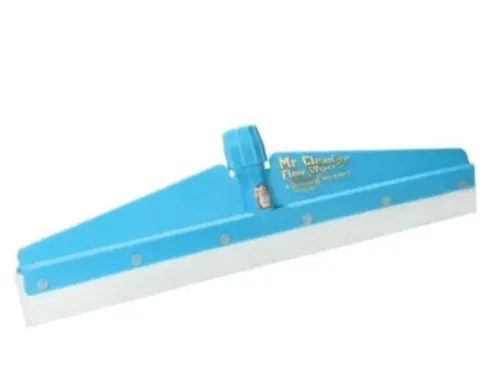
| Floor wiper | Moves liquid quickly after a spill and leaves little equipment to store | It spreads cleaning solution poorly and does not replace a damp-mopping system |
Run a same-area trial before placing a bulk order. Use the same solution, floor type and soil load for every system, then record:
- Operator minutes and number of wringing cycles
- Solution consumed and wastewater produced
- Leakage around the wringer
- Floor-dry time against your safety target
- Mop heads required for one shift
- Cleaning result after one pass
Test a greasy patch and a large spill separately; a spin mop is best for light to moderate routine soil, not every recovery job. If Unique Trading Company is on your shortlist, request sample units and replacement-head details before standardising the system across sites.
Prevent Dirty Water, Odour and Mildew After Cleaning
Do not leave a used mop head soaking in the bucket. Damp storage encourages odour and microbial growth, while dirty water can spread soil to the next area.
- Remove hair and grit from the mop head by hand or with a disposable scraper. Rinse away food residue before it dries; do not return loosened debris to the wash water.
- Empty the dirty solution, then remove the head for mop head washing. Launder it according to the care label, using the approved detergent and cycle.
- Dry the head completely in an open, ventilated place before storage. Sealing a damp head in a cupboard defeats mildew prevention.
- Rinse the bucket, paying attention to the base, handle joints and seams where residue collects.
- Flush the spin basket and wipe beneath its rim. Turn the bucket upside down only after excess water has drained.
Bucket cleaning is part of the cleaning process, not an optional final touch. Soil left in seams can produce smell and contaminate fresh solution.
Use separate, documented heads for toilets, general floors and food-service areas. Store them apart after drying. If the solution looks cloudy, contains particles or smells sour, replace it before the next section; a convenient wringer cannot make contaminated water clean.
Frequently asked questions
How do you operate a Walk N Twist mop without soaking the floor?
Fill the bucket below the spin basket, dip the mop head, then twist it until it reaches the dampness your floor needs.
How does twisting reduce bending and hand wringing?
The twisting mechanism removes water inside the bucket, so you avoid squeezing the mop head by hand or repeatedly bending down.
How damp should the mop be for different cleaning jobs?
Use a wetter head for heavily soiled, water-tolerant floors and a lightly damp head for routine cleaning or surfaces that dry slowly.
How should mop moisture match the floor surface?
Sealed tile and vinyl tolerate a damp mop, while wood, laminate and other moisture-sensitive surfaces need minimal water and quick drying.
How can you prevent dirty water, odour and mildew after cleaning?
Empty and rinse the bucket, wash the mop head, remove excess water, and let the head dry fully before storage.