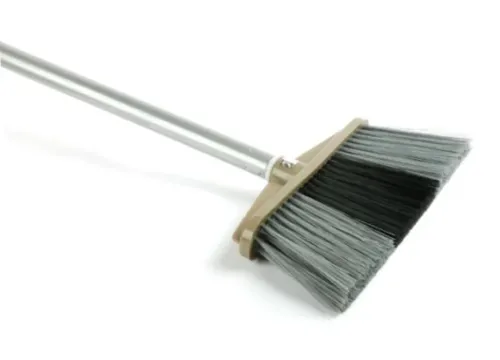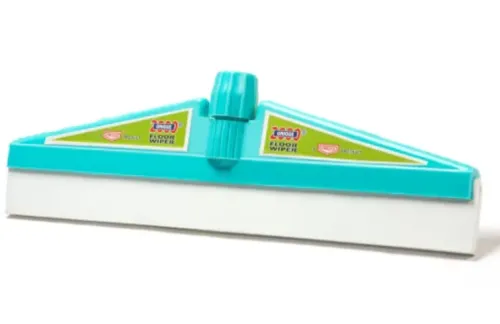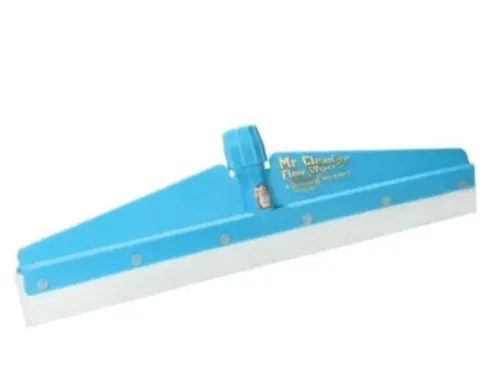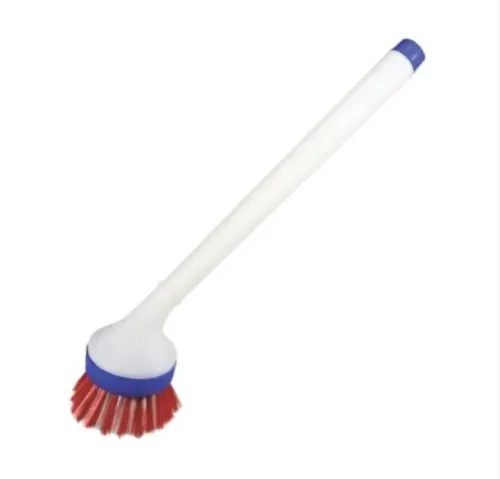
A low quoted price does not tell you whether a floor brush will suit ceramic tile, epoxy, unfinished concrete or repeated disinfectant exposure. By defining the cleaning task, auditing the manufacturer, testing samples and comparing lifetime cost, you can select a supplier that delivers consistent performance for household use or demanding commercial sites.
Key takeaways
- Choose bristles by floor type, soil and cleaning method.
- Match block material and handle strength to daily workload.
- Request factory evidence, samples, batch details and test records.
- Compare replacement rates, labour time and delivered cost—not unit price alone.
Start with the floor, soil and cleaning task
Define the brush by the floor, soil and task—not by head size alone. A brush for dry dust on ceramic tile has different requirements from one used to scrub cement after wet debris, and epoxy flooring can be marked by bristles that are unnecessarily hard.
1. Record the floor finish: ceramic tile, vitrified tile, cement, epoxy flooring, terrazzo, natural stone, vinyl or unfinished concrete. Note grout width, surface texture and any coating that must not be scratched.
2. Name the soil: fine dust, sand, hair, food residue, mud, grease or adhered deposits. Flagged or split synthetic filaments improve fine-dust pickup; unflagged, stiffer filaments suit larger or stuck debris.
3. Specify the task: dry sweeping, wet scrubbing, grout cleaning, edge work or debris removal. Add the required bristle length, diameter, density, stiffness and trim pattern rather than asking for a “heavy-duty” brush.
4. State the operating conditions: household use or daily commercial use, detergent exposure, water contact, storage space and the area cleaned per shift. Persistent wet cleaning favours synthetic filaments because natural fibres absorb water, swell and retain organic matter.
Ask for samples on your actual floor finishes. Test dry dust, wet debris, corners and repeated detergent exposure, then record residue, bristle deformation, odour retention and cleaning time after use. A short demonstration can hide the failures that determine replacement frequency.
Match bristles, block and handle to the work
Cleaning performance and service life are set by bristle stiffness, bristle diameter, bristle density, bristle length and trim pattern, then by the block and handle connection. A wide head with sparse, fine filaments can cover ground quickly yet leave soil behind and wear out sooner than a narrower, heavily filled head.
| Task | Bristle specification | Block and handle |
|---|---|---|
| Dry fine dust | Soft filaments, small bristle diameter, high bristle density, medium bristle length, flagged trim | Rigid polypropylene or HDPE block; lightweight handle with a secure socket |
| Wet scrubbing | Medium to stiff filaments, larger diameter, dense fill and short trim | Chemical-resistant block; threaded handle connection that will not loosen under downward force |
| Grout cleaning | Stiff, narrow filaments with short bristle length and an even, tight trim pattern | Narrow reinforced block; handle diameter suited to sustained pressure |
| Heavy debris | Stiff, thick filaments with longer bristle length and an open trim pattern | Impact-resistant block; steel or fibreglass handle with a reinforced socket |
Put these fields on the quotation: head width and depth, total bristle weight or fill density, filament diameter and cut length, block material, handle length and diameter, thread or socket interface, gross weight, packaging unit and dimensional tolerances.
A weak socket causes wobble before the bristles wear out, while an undersized block can crack during wet scrubbing or repeated detergent exposure.
Audit whether the supplier is a real manufacturer
A manufacturer can show where brushes are made, how they are made and which records identify each batch. A trader, distributor or private-label reseller usually offers a catalogue and an invoice but cannot provide plant-level evidence.
Ask for these records before treating the supplier as a manufacturer:
- The factory address, legal entity name, photographs or a live video of moulding, filament insertion, trimming and handle assembly. Check that the address matches the GST registration certificate and the invoice.
- Production capacity stated as brushes per shift or month, separated by model. Compare it with your order quantity and requested delivery date.
- A machinery list naming injection-moulding machines, bristle-setting equipment, trimming machines and assembly tools. Ask which operations are performed in-house.
- Quality-control records showing incoming-material checks, bristle pull tests, dimensional checks and final inspection, with sample dates and batch numbers.
- Product markings, production records and a named quality or operations contact who can trace a finished brush to materials, operators and inspection results.
- GST details, including the GSTIN, registered legal name, business address and product classification. GST registration supports identity; it does not prove factory ownership.
Whether you assess Unique Trading Company or another supplier, request a sample invoice, batch record and factory tour together. An ISO 9001 certificate only proves a quality-management system within its stated site and scope; check its expiry and demand separate product test records.
Do not accept “antimicrobial” or “recycled plastic” without the active substance or recycled-content percentage and calculation basis.
Related products
 | Plastic Brooms Approx. Price: Rs 146 / PieceGet Latest Price Product Brochure Product Details: Bristle Stiffness Medium Usage/Application For Brooming, Scrubbing &... View product → |
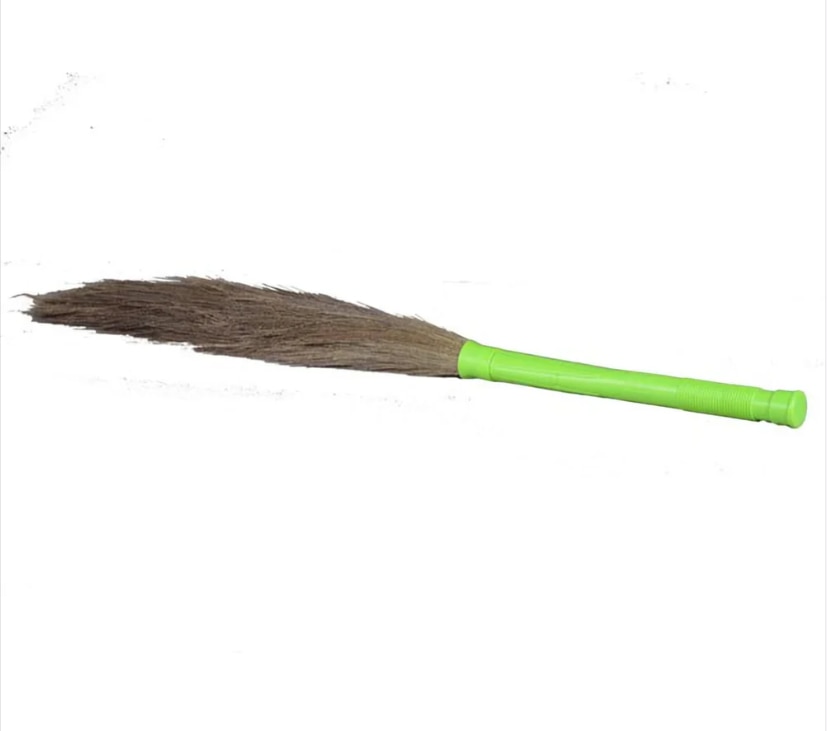 | Grass Broom Approx. Price: Rs 86 / PieceGet Latest Price Product Details: Minimum Order Quantity 100 Piece Handle Material Plastic Material Grass... View product → |
Approve samples with documented tests and traceability
Approve a sample only after it survives tests that match your purchasing risk. Record the sample’s supplier code, batch or production date, material specification, photographs and inspector’s name so later shipments can be compared with the approved reference.
1. Inspect the block, socket and handle for cracks, sharp edges, poor alignment, loose tufts and inconsistent trim. Check dimensions, bristle diameter, density and length against the specification, then document any deviation.
2. Measure bristle retention with pull-out testing. Apply a defined force to a set number of tufts and record detached filaments; repeat the check after dry sweeping to expose weak anchoring.
3. Run wet-use testing with the actual detergent dilution and floor finish. Sweep wet debris, rinse the head, dry it as operators would, and record bristle deformation, odour retention, socket movement and cleaning time after use.
4. Conduct a controlled field trial on the hardest relevant tasks: fine dust, adhered debris, edges, corners and repeated detergent exposure. Record area cleaned per minute, visible residue, handle failures and operator cleaning time.
Use ISO 2859-1 acceptance sampling for pre-shipment or incoming inspection, with separate definitions for critical, major and minor defects. Do not treat its AQL index as a defect-rate promise. Validate packaging separately under ASTM D4169 hazards such as impact, vibration and compression; a durable brush can still arrive with crushed blocks or bent handles.
Keep the approved sample, test sheets, batch records and signed inspection result together.
Compare total cost for household and commercial operations
Choose the supplier with the lowest cost per usable cleaning hour, not the lowest quoted unit price. A sparse fill, low-mass filaments or a proprietary handle connection can make a cheap brush expensive after early replacement and downtime.
| Cost item | Household operation | Commercial operation |
|---|---|---|
| Purchase price | Compare like-for-like head size, fill and handle | Negotiate against tested specification, not catalogue price |
| Replacement cost | Include spare heads, handles and socket failures | Calculate replacements per month and labour for changeover |
| Freight | Include delivery charge and storage space | Include freight cube, pallet quantity and delivery frequency |
| Productivity | Measure usable hours before bristle deformation | Measure cost per 1,000 square metres, including rework |
| Hygiene controls | Price separate colour coding for bathrooms, kitchens and living areas | Price dedicated tools, inspection and replacement by zone |
Run a controlled field trial before approving the manufacturer. Test dry fine dust, wet debris, edges, corners, repeated detergent exposure and every actual floor finish. Record area cleaned per minute, visible residue, bristle deformation, handle or socket failures, odour retention and post-use cleaning time.
Use the trial results to calculate:
- Total operating cost = purchase, replacements, labour and freight divided by usable cleaning hours.
- Chemical compatibility with your detergents, degreasers and disinfectants; incompatibility can soften filaments, embrittle plastic or shorten service life.
- Colour coding and segregation costs where cross-area contamination matters.
A supplier that costs more per brush wins when its tested head lasts longer, covers more floor per minute and creates fewer failures. A short demonstration cannot prove that.
Frequently asked questions
How do you choose the right floor brush for a cleaning task?
Define the floor, soil and task first. Match bristle stiffness and shape to dry dust, wet debris, cement residue or scrubbing without marking the surface.
What should you check in a floor brush’s bristles, block and handle?
Check bristle material and stiffness, block strength, handle diameter, grip, socket connection and resistance to water and cleaning chemicals.
How can you verify that a floor brush supplier is a real manufacturer?
Ask for the factory address, manufacturing-process details, business and licence documents, production photographs, quality records and evidence that the supplied model is made there.
How should you compare floor brush suppliers on total cost?
Include purchase price, freight, replacement frequency, cleaning labour, downtime, packaging and defects. A cheaper brush costs more when it wears quickly or slows the job.
Related product
 | Cleaning Brushes Unique Trading Company Unique Trading Company presents the high-quality Jala Brush, designed to deliver powerful and efficient cleaning for a wide... View product → |