The right toilet brush must match the bowl’s shape, surface, rim access, cleaning chemicals, and storage conditions—not simply have the stiffest bristles or the lowest price. By the end, you will be able to compare brush designs, run a safe cleaning routine, and specify the evidence and trial checks needed before buying for a home, office, hotel, or public washroom.
Key takeaways
- Match bristle stiffness and head shape to the bowl’s surface and geometry.
- Choose a long, non-slip handle with splash control and a stable, ventilated holder.
- Never mix toilet cleaner with bleach or other cleaning chemicals.
- Rinse, disinfect, dry, and replace the brush when bristles deform or retain residue.
Match bristle stiffness and head shape to the toilet bowl
Choose toilet brush bristle stiffness and head shape by the bowl’s surface and hard-to-reach geometry, not by bristle count alone. Soft bristles suit routine cleaning and reduce scratching; medium bristles handle ordinary mineral and organic buildup.
Reserve stiff bristles for dried deposits on surfaces confirmed to tolerate aggressive scrubbing, because they can mark glazed, coated, plastic, or damaged fixtures.
| Option | Access advantage | Best fit and caution |
|---|---|---|
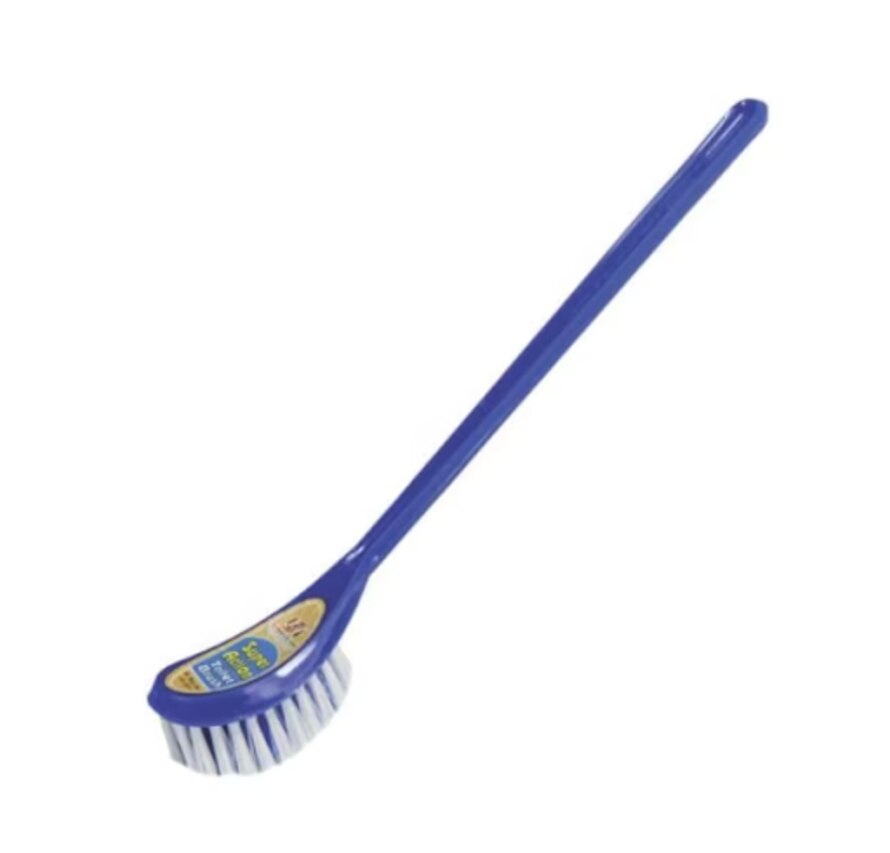
| Hockey-shaped toilet brush | Reaches beneath the rim and into the rear curve | Good for bowls with a pronounced rim; check that the broad end does not jam in a narrow trap |
| Round toilet brush | Covers the waterline evenly and follows open, curved bowls | Suitable for general cleaning; a wide head can miss concealed trap recesses |
| Angled toilet brush head | Directs pressure into the rim junction and side walls | Useful for offset or deep rims; avoid forcing the tip against fragile glaze |
| Narrow sanitary brush | Enters tight channels and concealed trap areas | Best for restricted geometry; requires more passes on broad surfaces |
A dense head can remove soil quickly but rinses poorly and retains more liquid in the holder. Choose a shaped, less crowded head when drainage and access matter more than speed.
Silicone or elastomeric fins rinse rapidly, while nylon bristles often scrub textured bowls and the underside of the rim better; compare cleaning results rather than accepting “antibacterial” as proof of disinfection. Test every candidate on a representative fixture for complete access and no visible scratching.
Check reach, grip, splash control, and holder design
Handle dimensions and holder design determine whether you can scrub without touching the bowl, splashing contaminated water, or storing a damp brush in a hidden reservoir. Choose toilet brush handle length against the bowl’s depth and the user’s cleaning posture: excessive length reduces control in a compact bowl and can strike nearby fixtures.
Check these points before choosing:
- Hold the brush with a wet or gloved hand. A non-slip toilet brush grip needs raised texture or a secure contour, not a smooth polished surface that twists during scrubbing.
- Keep the handle long enough to place your hand well above the rim. If you must bend, kneel, or reach close to the water, the handle is too short for that toilet and user group.
- Look for a splash-control collar or head design that limits water flicking as you lift the brush. A wide collar can also trap soil, so inspect whether you can wash every surface.
- Choose a ventilated toilet brush holder that allows air to circulate around the head. Ventilation speeds drying, but an open top without drip containment can soil the floor, cart, or hands.
- Check toilet brush stand drainage: rinse water must collect in a removable reservoir or drain through an accessible outlet. Avoid sealed cavities that retain dirty water and odor.
- Confirm that the holder can be emptied, rinsed, and dried without touching the brush head.
Treat the brush and holder as one hygiene system, not as separate replacement parts.
Use the brush with cleaner without creating a chemical hazard
A safe toilet cleaning sequence separates soil removal from disinfection and prevents incompatible chemicals from meeting in the bowl, brush, or holder. Mechanical scrubbing removes deposits; the brush does not disinfect the surface or its own head.
1. Read each product label before use. Put on chemical-resistant gloves, protect your eyes from splashes, ventilate the room, and flush the bowl if the label directs you to dilute or pre-wet the surface.
2. Apply one compatible toilet cleaner to the bowl, not a second product over the first. Scrub beneath the rim, around the waterline, and into the trap area, then flush thoroughly. Follow the label’s surface contact or rinsing instructions.
3. If disinfection is required, apply a product approved or registered for toilet-bowl use only after cleaning. Keep the surface visibly wet for the stated disinfectant contact time; wiping or flushing too soon reduces its effect.
4. Observe the bleach and toilet cleaner warning: never combine bleach with an acidic bowl cleaner or an ammonia-containing product. Hazardous gases can form. Flush away one chemical and follow its label before using another.
5. Rinse the brush with clean water, allow excess water to drain, and place it in a ventilated holder. Confirm toilet brush chemical compatibility for the actual cleaner, disinfectant, handle, bristles, and holder materials; water-only testing proves little. A damaged, softened, cracked, or discoloured brush should be removed from service.
Control contamination through cleaning, storage, and replacement
Rinse the brush with clean water after every use, then let it drain before returning it to the stand. A brush removes soil by mechanical action; it does not disinfect the bowl or its own head.
If disinfection is required, clean first, then use a registered or approved product and keep surfaces visibly wet for the label’s contact time.
- Wash and disinfect the stand on the commercial washroom cleaning schedule, and empty trapped water that keeps the brush head wet.
- Keep toilet brushes assigned to toilets, urinals, and other zones; use distinct colours, written zone rules, separate storage, and staff training. Colour alone will not prevent toilet brush cross-contamination if someone returns it to the wrong holder.
- Do not mix bleach with acidic bowl cleaner or ammonia-containing products. Test the brush, handle, and stand against the actual chemicals used.
- Store the brush upright where air can circulate, away from clean cloths, paper goods, and handwashing supplies.
Replace toilet brush heads when bristles remain soiled after washing, become flattened or sharp, shed, split, or develop a persistent odour. Replace the stand when cracks, residue, or poor drainage prevent effective cleaning.
For commercial sites, set a documented replacement interval and track cost per occupied toilet per month; a replaceable head is not automatically cheaper when changeover labour and disposal are included.
Test the complete brush-and-holder system before bulk purchase
Buy a small sample lot and use each brush-and-holder system through several cleaning cycles before approving a bulk toilet brush supplier. Test it in the actual bowl types, cleaning chemicals, storage locations, and staff routines; a brush that performs well in water can fail once the holder traps contaminated rinse water.
Use this toilet brush procurement checklist for every sample:
- Check rim access, splash control, grip, drainage, ventilation, reservoir emptying, and cleaning time.
- Test the handle, bristles, holder, and any replaceable head against the actual bleach-based, acidic, or ammonia-containing products used on site. Never mix these chemicals.
- Perform a no-scratch test on representative glazed, coated, plastic, and damaged surfaces.
- Record batch or sample reference, bowl type, chemical dilution, contact time, cycle count, visible soil removal, damage, odour, drying time, and holder cleaning effort.
| Test area | Compare | Record |
|---|---|---|
| Holder hygiene | Draining, ventilated holder versus water-trapping closed holder | Residue after removal, emptying time, and cleanability |
| Replacement model | Fixed head versus replaceable head | Head price, change time, disposal, storage space, and failures |
| Programme control | One colour versus colour plus zone label and separate storage | Wrong-zone returns and staff compliance |
Calculate toilet brush total cost per occupied toilet per month or per cleaning cycle. Include landed price, replacement frequency, labour, spare stock, holder cleaning, and disposal—not just the unit price. Ask Unique Trading Company for samples and written material or chemical-compatibility details before comparing its quotation with alternatives.
An EN 1276 result concerns a disinfectant suspension test, not brush hygiene.
Related products
 | Toilet Brush CN07 Uniclean Double Action Plastic Toilet Brush Approx. Price: Rs 80 / PieceGet Latest Price Product Details: Minimum Order Quantity 100 Piece Material Plastic Usage/Application Toilet Cleaning... View product → |
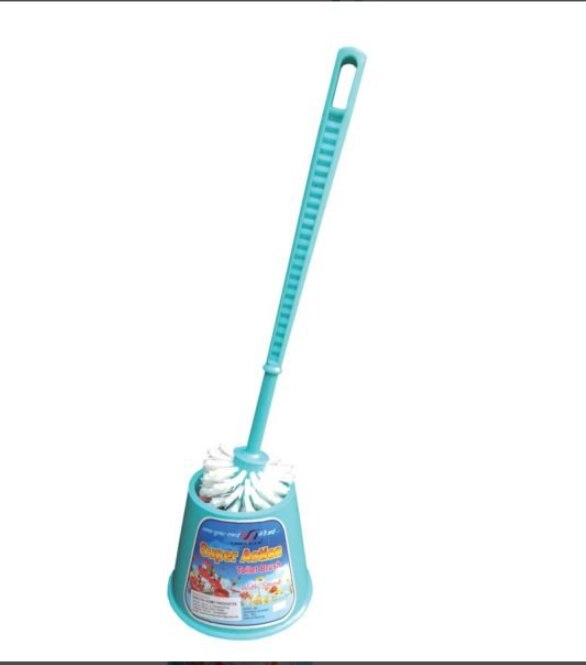 | Toilet Brush CN02 Super Action Round Plastic Toilet Brush With Stand Approx. Price: Rs 116 / PieceGet Latest Price Product Details: Minimum Order Quantity 100 Piece Material Plastic Usage/Application Toilet Color Blue... View product → |
Frequently asked questions
How do you match bristle stiffness and head shape to a toilet bowl?
Use soft bristles for routine cleaning and to reduce scratching. Choose medium bristles for ordinary mineral and organic buildup. Select a head that reaches beneath the rim and around the bowl’s curves.
What should you check in a toilet brush handle and holder?
Check the handle’s reach, grip, and splash control. Choose a stable holder that contains drips, allows airflow, and keeps the brush from sitting in stagnant water.
How can you use toilet cleaner without creating a chemical hazard?
Follow the cleaner label, use ventilation and protective gloves, and never mix toilet cleaner with bleach, ammonia, or another cleaning product.
How do you control contamination and know when to replace a toilet brush?
Rinse the brush after use, disinfect it according to the cleaner label, and let it dry in a ventilated holder. Replace it when bristles deform, shed, retain residue, or develop an odour.
How should you test a toilet brush system before buying in bulk?
Test the brush and holder together for bowl coverage, reach, grip, splash control, drainage, stability, cleaning, and storage. Inspect several units for consistent construction before placing a bulk order.
Related product
 | Toilet Brush Uniclean Hockey Type Plastic Toilet Brush Approx. Price: Rs 60 / PieceGet Latest Price Product Details: Minimum Order Quantity 100 Piece Material Plastic Usage/Application Toilet Color Blue... View product → |