A spin mop saves effort only when its wringer removes the right amount of water, the head matches your floor, and the bucket remains stable during repeated rinsing. By comparing the operating cycle, moisture control, materials, reach, durability, and upkeep, you can choose a mop that cleans efficiently without leaving streaks, puddles, or avoidable replacement costs.
Key takeaways
- Choose adjustable wringing when floors need different moisture levels.
- Match mop-head material and size to your floor and cleaning load.
- Check bucket mobility, handle strength, and secure head attachment before buying.
- Compare replacement heads and bucket durability, not just the purchase price.
How the Spin-Wringing Cycle Controls Moisture
A spin mop works by wetting the mop head, placing it in the basket, and rotating it so centrifugal force pushes water from the fibres. Use enough solution to cover the head, but do not soak the handle or bucket mechanism.
- Rinse the head in clean solution until the fibres are evenly wet.
- Lift it above the bucket, place it flat in the wringer basket, and secure the handle.
- Run the spin cycle for the stated spin cycle time, keeping the head centred so it does not strike the basket.
- Test the head over the bucket. Repeat a short cycle if water still streams from the fibres.
- Mop a small area, then wring again when the head leaves puddles, drags, or spreads dirty water.
A suitable moisture level leaves the head damp rather than dripping. The floor should show a thin, even film that dries without standing water, streaks, or a slippery patch.
Ask for residual moisture or water pickup measured after a defined cycle; “maximum drying” gives you no usable comparison because loading, fibre distribution, and spin duration change the result. A wringer removes water, not germs, so drying the head does not disinfect it. Use a separately specified disinfectant and contact time when sanitation is required.
Choose the Mop Head for Your Floor and Cleaning Load
Microfiber versus cotton matters less than matching absorbency, pile, and moisture to the floor. For tile floor cleaning, choose a looped or textured head that lifts grit from grout; use enough water to loosen soil, but spin until the head stops dripping.
A heavy head is not automatically better: high GSM can hold more water and dry slowly.
| Floor or area | Mop-head choice | Moisture level and reason |
|---|---|---|
| Tile | Looped microfiber or cotton blend | Damp to moderately wet for grout and tracked-in soil; remove excess water to prevent slippery patches |
| Marble | Fine-pile microfiber with soft, non-abrasive fibers | Barely damp; excess water can leave marks, and grit can scratch the finish |
| Sealed wood | Low-pile microfiber | Lightly damp, never wet; standing water can enter joints or dull the seal |
| Laminate | Low-pile microfiber | Nearly dry; excess moisture can swell board edges and cause lifting |
| Textured surfaces | Looped microfiber or absorbent cotton | Moderately wet so fibers reach recesses; rinse often so trapped grit is not redistributed |
| Bathrooms | Looped microfiber, with a washable edge | Damp to moderately wet for soap residue; finish with a drier pass around fixtures and thresholds |
For marble cleaning, use a pH-neutral cleaner approved for stone and rinse away grit before mopping. Sealed wood and laminate care requires separate attention: do not assume a floor labelled water-resistant tolerates puddles.
After use, launder the head rather than only rinsing it. Confirm the care label’s wash temperature, fabric-softener and bleach restrictions, drying method, and replacement-head compatibility. A damp, dirty head develops odour and spreads soil.
Compare the Wringer, Bucket, and Mobility Features
Choose a wide, low-centre bucket with a firm wringer basket, a guarded rim, and a stable handle. These features improve speed and basket stability while reducing tipping when you pull the handle sideways or carry a wet load.
| Feature | Better choice | Why it matters |
|---|---|---|
| Pedal versus hand-spin | Pedal for frequent hands-free cycles; hand-spin for fewer mechanical parts | A pedal speeds repeated wringing, but adds wear points. Ask for separate cycle-test results for the pedal, drive gear, basket bearing, and lid hinge. |
| Basket stability | Locked basket with a supported bearing and no side-to-side wobble | An unstable basket wastes time, splashes water, and can damage the drive mechanism. |
| Splash control | High rim, drainage channels, and a close-fitting wringer guard | These contain displaced water when a heavily loaded mop head spins. |
| 5-litre versus 7-litre bucket | 5-litre for lighter carrying; 7-litre for larger areas | Compare the usable fill line, not nominal capacity. Clearance is needed for the mop head and splash displacement. |
| Mobility | Wide wheels, a locking handle, and a drain plug | You can move the bucket safely without lifting it or spilling dirty water. |
Clean-water and dirty-water separation reduces soil re-deposition, but it does not stop transfer through the mop head, basket, or hands. Confirm whether the design has two sealed reservoirs or only a divider sharing wringing water.
For wholesale evaluation, check these details before choosing a model:
- Request residual-moisture or water-pickup results after a stated spin time.
- Test the filled bucket on turns, thresholds, and uneven flooring.
- Reject claims that equate a drier mop with disinfection; spinning removes water, not microbes.
Check Reach, Handle Strength, and Mop-Head Attachment
A spin mop reaches tight spaces only when its swivel joint keeps controlled movement under a wet head, not merely when the unloaded head turns 360 degrees. Test it around a chair leg, along a wall, and beneath low furniture; excessive looseness can make the head flip or leave one edge dry.
Check these points before choosing:
- Flex the swivel joint while the mop head is wet and loaded. It should turn smoothly without folding, locking, or losing contact at the corners.
- Extend the telescoping pole fully and press the head forward, sideways, and downward. Bending, rattling, or pole collapse signals poor resistance to everyday cleaning forces.
- Hold the handle grip with wet hands. Choose a textured, secure grip that does not rotate inside the pole when you pull along a baseboard.
- Compare mop-head size and edge reach with the spaces you clean. A large head covers floors faster, but a smaller profile reaches toilet bases, narrow gaps, and furniture legs.
- Twist, lift, and pull the wet head sideways to test its attachment. A screw-on, tab, or push-fit connection must not release under torsion.
- Confirm that the head is replaceable and that the exact fitting remains available separately. A proprietary head with no stocked replacement can make an inexpensive set uneconomic.
Inspect edge stitching and attachment points after washing; loose fibres or cracked tabs will worsen quickly under repeated wet-load handling.
Calculate Ownership Cost Before You Buy
A low purchase price becomes expensive when the mop head is proprietary, the wringer wears out, or cleaning chemicals damage the fibres. Calculate the purchase price plus replacement heads, washing labour, detergent, water, and expected repairs over the period you plan to use it.
1. Confirm replacement head availability before ordering. Ask for the exact attachment type, current replacement-head price, minimum order quantity, and written assurance that heads will remain stocked. A handle-and-bucket set is a poor bargain if one worn head requires replacing the entire unit.
2. Price the care routine. Choose a machine-washable mop head only when the supplier states the maximum wash temperature, drying method, fabric-softener restriction, bleach restriction, and expected wash cycles before performance declines. A head that is merely rinsed can retain soil and develop odour, increasing replacement frequency.
3. Check chemical compatibility in writing. Match the head fibres, bucket plastic, seals, and wringer parts to the detergents and disinfectants you use, including dilution limits. Unapproved bleach, solvents, or concentrated cleaner can weaken fibres, discolour plastic, or make seals brittle.
4. Test the costliest failure points before a bulk order. Request cycle-test results for the pedal, drive gear, basket bearing, and lid hinge, plus the warranty and spare-part terms. Ask whether residual moisture was measured after a defined spin cycle; “maximum drying” is not a maintenance or performance specification.
For a bulk comparison, Unique Trading Company can provide model-level information that lets you compare head replacement terms and component support instead of judging economy by the opening quote alone.
Related products
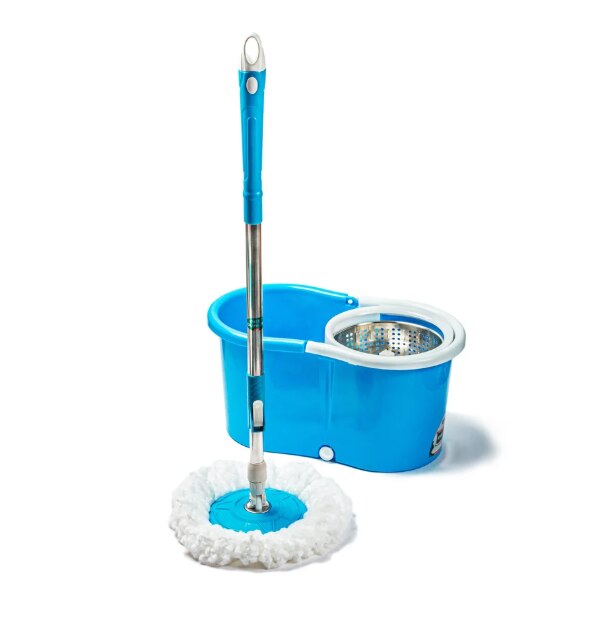 | Spin Mop Approx. Price: Rs 670 / PieceGet Latest Price Product Brochure Product Details: Minimum Order Quantity 100 Piece Mop Head Material Cotton Bucket... View product → |
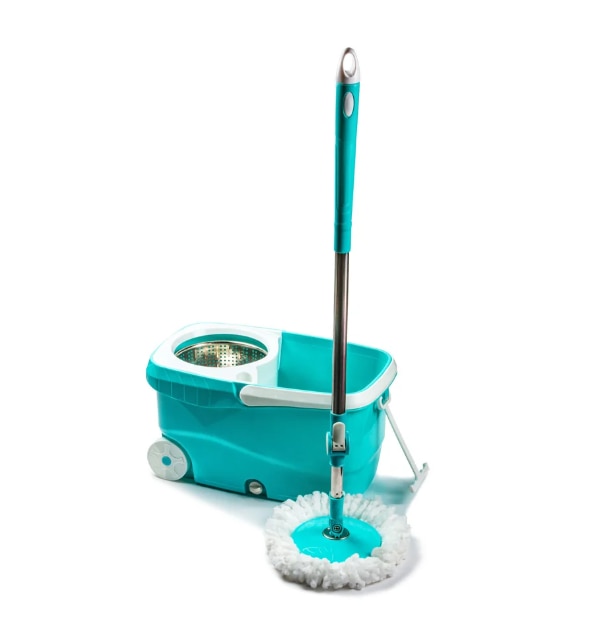 | Spin Mop Approx. Price: Rs 805 / PieceGet Latest Price Product Brochure Product Details: Minimum Order Quantity 100 Piece Mop Head Material Cotton Bucket... View product → |
Frequently asked questions
How does a spin-wringing cycle control mop moisture?
Place the wetted mop head in the basket and rotate it so centrifugal force removes water from the fibres. Adjust the cycle to leave less moisture on floors that cannot tolerate excess water.
Which mop head should you choose for your floor?
Match the head material, texture, and size to the floor surface and the cleaning load. Use a head that lifts soil without leaving excess water or scratching the finish.
Which bucket and wringer features matter most?
Compare basket stability, wringer operation, bucket capacity, splash control, carrying handles, and caster mobility. Choose features that reduce repeated filling, lifting, and spills.
What should you check on the handle and mop-head attachment?
Check the handle length and reach, shaft strength, grip, and locking mechanism. Confirm that the mop head attaches firmly and can be removed for washing or replacement.
How do you calculate a spin mop's ownership cost?
Add the purchase price, replacement mop heads, cleaning solution, and delivery costs over the expected service period. Include the time required for washing, drying, filling, and storing the equipment.
Related products
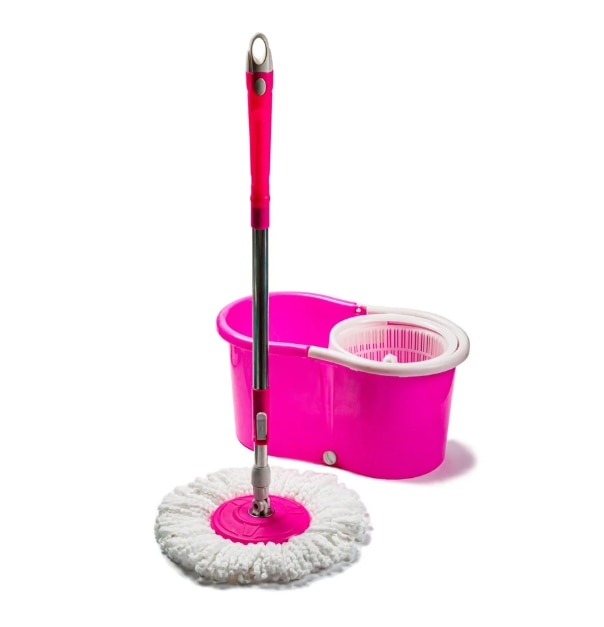 | Spin Mop Unique Spin N Shine Bucket Mop Approx. Price: Rs 570 / PieceGet Latest Price Product Brochure Product Details: Mop Head Material Microfiber Rod Material Stainless Steel Type of... View product → |
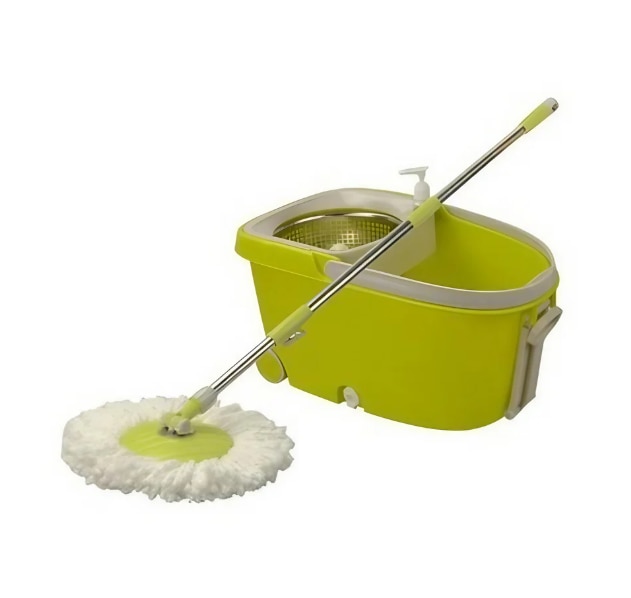 | Spin Mop Approx. Price: Rs 800 / PieceGet Latest Price Product Details: Minimum Order Quantity 100 Piece Mop Head Material Microfiber Bucket Capacity 7 ltr... View product → |