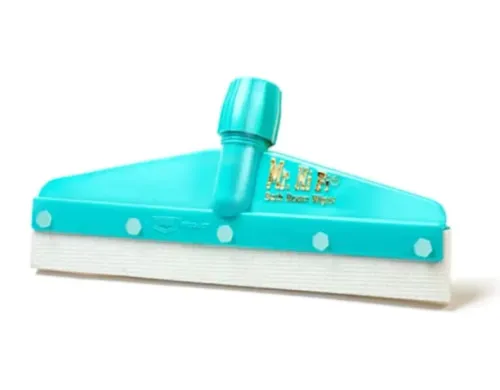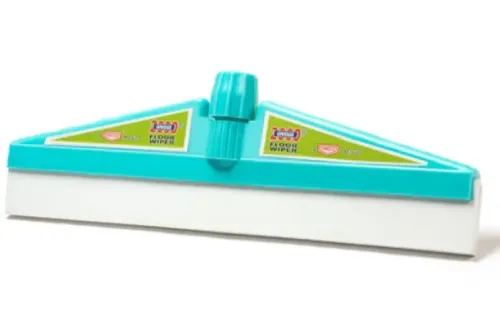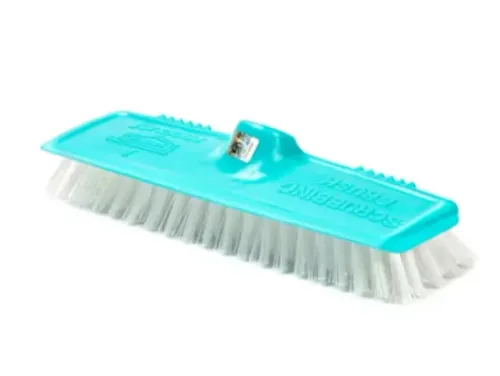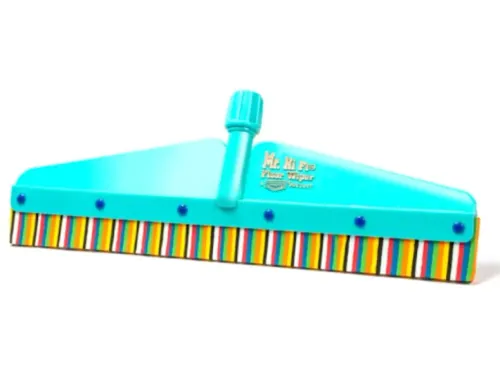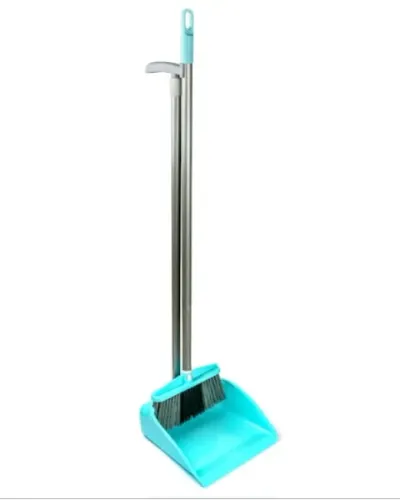
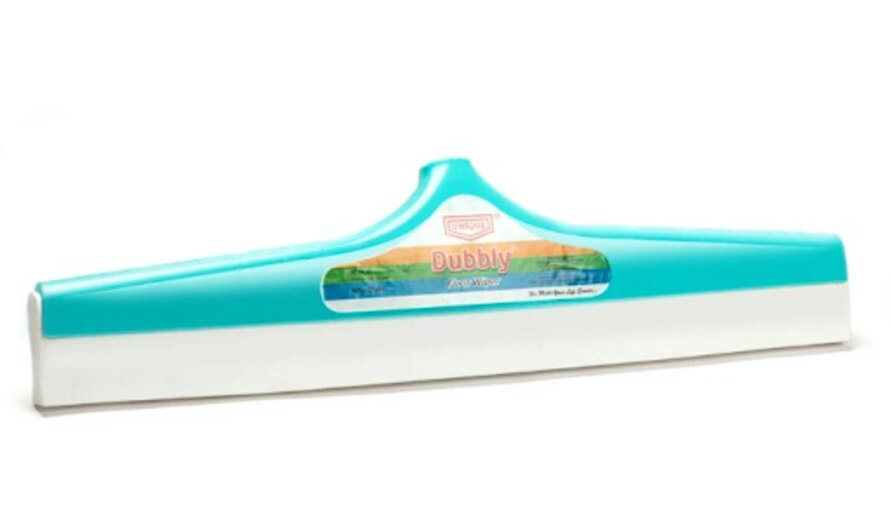
A floor wiper clears liquid by pushing it to a drain, doorway, or collection point, so the result depends on workflow, blade contact, and the route you give the water. By the end, you will be able to select a blade width, use the correct pressure and angle, and judge whether a plastic wiper suits your floor and cleaning task.
Key takeaways
- Direct displaced liquid toward a drain, doorway, or collection point.
- Choose blade width according to floor area and obstacles.
- Use moderate pressure and a shallow angle for faster passes.
- Check blade flexibility, handle strength, and edge contact before buying.
How a floor wiper turns wet cleaning into a shorter workflow
A plastic floor wiper speeds quick floor cleaning by using liquid displacement: its blade pushes water or cleaning solution across the floor instead of absorbing it. A floor squeegee therefore clears a broad wet area faster than repeated mopping, but you must decide where the liquid will finish.
1. Remove sand, hair, food particles, and packaging fragments before adding water. Loose debris can interrupt the blade seal, scratch some floors, lodge between the blade and head, and force repeated passes.
2. Apply only enough water or cleaning solution to loosen the soil. Excess liquid creates a larger recovery job and extends wet-floor exposure.
3. Start at the farthest point from the drain or collection point. Work toward the exit without pushing water across areas you have already cleaned.
4. Pull the liquid toward the drain or collection point in steady strokes. Keep the blade edge in contact with the floor; the wiper moves liquid, so it cannot remove water safely without a planned destination.
5. Rinse the blade between passes. Grit trapped on the edge can break the seal and leave narrow wet strips behind.
Removing liquid quickly shortens the time a smooth floor remains wet, reducing disruption and slip risk when the route stays clear. A wiper does not disinfect; follow the chemical label’s concentration and contact-time instructions, then complete any required rinsing or collection.
How much floor does each blade width cover in one pass?
On a one-metre stroke, each blade covers roughly its width in square metres before overlap, obstacles, or uneven movement reduce the result.
- A 30 cm floor wiper covers about 0.30 square metres.
- A 40 cm floor wiper covers about 0.40 square metres.
- A 41 cm blade covers about 0.41 square metres; 42 cm blade dimensions provide about 0.42 square metres.
- A 45 cm blade covers about 0.45 square metres.
- A 50 cm blade covers about 0.50 square metres.
These figures describe theoretical coverage with the full edge in contact and a straight one-metre stroke. Effective coverage is lower when walls, furniture, partitions, puddle shape, overlap, or poor control prevent the blade from clearing its entire width.
Wider blades reduce the number of strokes across open commercial floors, washrooms, loading areas, and large tiled rooms. That saves walking and repeated repositioning, but a wide head becomes awkward around toilets, kitchen units, furniture, partitions, and narrow corridors.
Choose width from the room’s geometry, not the maximum area figure. Use 30–42 cm where turning and access matter; choose 45–50 cm for broad, unobstructed floors where the full blade can travel continuously. A wider blade is slower overall if it needs constant lifting, angled corrections, or overlapping passes around obstacles.
How pressure, angle, and handle length affect speed
Use steady, moderate cleaning pressure to keep the blade edge continuously against the floor. Forcing the head down bends or curls the blade, increases drag, interrupts the water sheet, and leaves narrow bands of moisture behind.
- Set the blade angle so its full wiping edge meets the floor. Lifting one corner creates a bypass path that leaves water on the surface, even when the stroke feels fast.
- Pull liquid toward a drain or collection point when that route is clear. Keep the destination ahead of you so each pass shortens the remaining wet area instead of spreading water into a pedestrian path.
- Push liquid away from a doorway when the doorway is the safer escape route. Stop before the threshold if water would enter another room, and redirect it toward a drain or container.
- Keep the stroke controlled and continuous. Jerking the handle breaks blade contact; excessive speed leaves a thin film that demands another pass.
- Choose handle length for the operator, stroke direction, room size, and whether the tool must push, pull, or do both. A long handle floor wiper reduces stooping during recovery, but an unnecessarily long one is harder to control around corners and during final drainage.
Good floor wiper technique depends on control, not maximum force. Test the blade on a small wet area: if it skips, curls, or leaves parallel strips, reduce pressure and inspect the edge before continuing.
Which floors and liquids respond well to a plastic wiper?
Smooth sealed floors give a wiper a continuous path for removing standing water, thin moisture films, routine wash water, and spills. Ceramic tile cleaning, vitrified tile, polished marble and granite floors, epoxy flooring, and sealed vinyl usually respond well because the blade can maintain contact across the surface.
| Floor or liquid condition | Expected result | What to check |
|---|---|---|
| Ceramic, vitrified tile | Fast water removal | Grout lines do not cause skipping |
| Polished marble, granite, epoxy, sealed vinyl | Clean, continuous stroke | Blade stays flat without streaks |
| Cement or textured safety flooring | Trails or residual puddles | Test whether texture breaks the seal |
| Damaged areas, expansion joints, uneven grout | Water bypasses the edge | Watch for narrow wet strips |
| Heavily worn surfaces | Inconsistent recovery | Repeat the wet test across the whole area |
Synthetic rubber or elastomer blades usually conform better than a rigid edge. An excessively soft blade can fold, curl, or drag grit, so inspect for streaking, skipping over grout, and residual strips during a wet test.
Use particular caution on laminate and wood: standing liquid or water driven into joints can cause swelling and edge damage. Carpet, stairs, tight corners, heavily porous floors, and areas without a drain or collection route are poor single-tool applications.
Plastic resistance to dilute detergent or salts does not prove compatibility with concentrated oxidizers, solvents, strong acids, strong alkalis, or high temperatures. Check the blade material against the site’s chemical list before use.
What to check before choosing a floor wiper for repeated use
A commercial floor wiper procurement check starts with the wiping edge, not the colour or plastic finish. Hold it against a straight surface and reject any nick from grit, broken tile, or metal swarf; each defect creates a bypass channel that leaves a narrow wet strip.
- Confirm that the edge has a straight, continuous profile across its full width.
- Ask whether the blade is a replaceable blade and whether a replacement fits without gaps.
- Inspect the retention channel: remove trapped grit, sludge, and fragments before they lift the blade.
- Tighten every fastener and reject loose hardware, missing screws, or mounts that flex during a stroke.
- Match head width and handle length to the room, operator, drain position, and planned push or pull direction.
| Option | What to inspect | Why it affects repeated use |
|---|---|---|
| One-piece blade | No joints or retention gaps | Fewer failure points, but the whole head may be discarded when worn |
| Replaceable blade | Secure channel and accessible fasteners | Supports lower total cost of ownership when replacements fit tightly |
| Long handle | Controlled reach without excessive flex | Reduces stooping; excess length makes corners and drains harder to control |
For washrooms, food-handling areas, vehicle bays, and production floors, assess the complete tool as food hygiene cleaning tools: it must be washable, disinfectable where required, quick to dry, and free from inaccessible crevices that trap liquid.
Businesses comparing bulk options from suppliers such as Unique Trading Company should record blade continuity, material compatibility, handle control, maintenance access, and replacement frequency instead of comparing unit price alone.
Before leaving the area, route every pushed band to a safe collection point; never leave wet liquid across a threshold or pedestrian path.
Related products
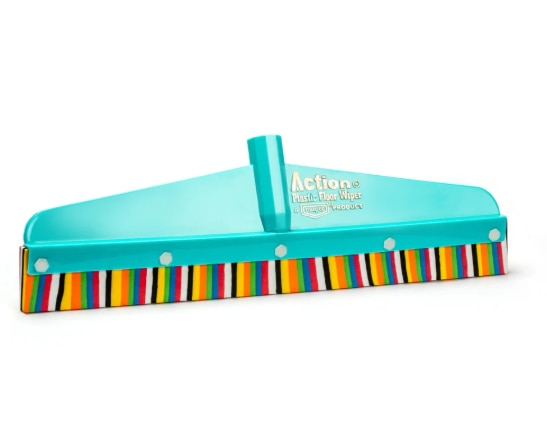 | Plastic Floor Wiper Approx. Price: Rs 140 / PieceGet Latest Price Product Details: Minimum Order Quantity 100 Piece Material Plastic Brand Unique Blade Material... View product → |
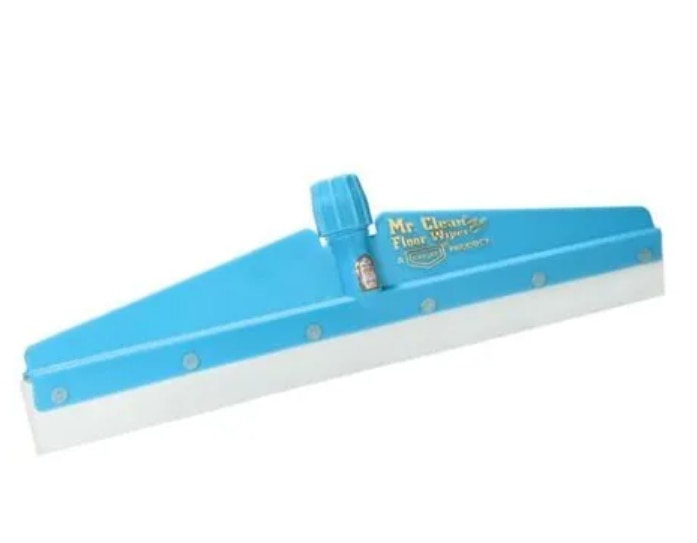 | Plastic Floor Wiper Mr Clean Plus Plastic Floor Wipers Approx. Price: Rs 158 / PieceGet Latest Price Product Details: Minimum Order Quantity 100 Piece Material Plastic Brand Unique Blade Material... View product → |
Frequently asked questions
How does a plastic floor wiper shorten wet-cleaning workflows?
Its blade pushes water or cleaning solution across the floor, reducing repeated mop passes and directing liquid toward a chosen collection point.
How much floor does each blade width cover in one pass?
A wider blade covers more open floor per pass, while a narrower blade works better around fixtures, corners, and tight spaces.
How do pressure and angle affect floor-wiper speed?
Moderate pressure keeps the blade edge in contact with the floor, while a shallow angle moves liquid smoothly without excessive drag.
Which floors and liquids work well with a plastic floor wiper?
It works best on smooth, sealed floors with water or diluted cleaning solution; uneven surfaces and thick liquids require a different tool.
What should you check before choosing a floor wiper for repeated use?
Check blade flexibility, edge quality, handle length, joint strength, grip comfort, and whether replacement parts are available.
Related products
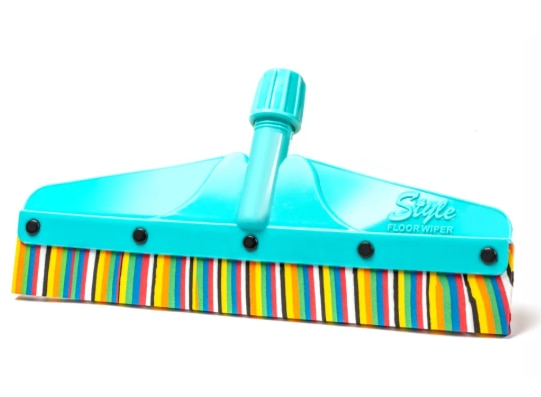 | Plastic Floor Wiper Approx. Price: Rs 130 / PieceGet Latest Price Product Details: Minimum Order Quantity 100 Piece Material Plastic Brand Unique Blade Material... View product → |
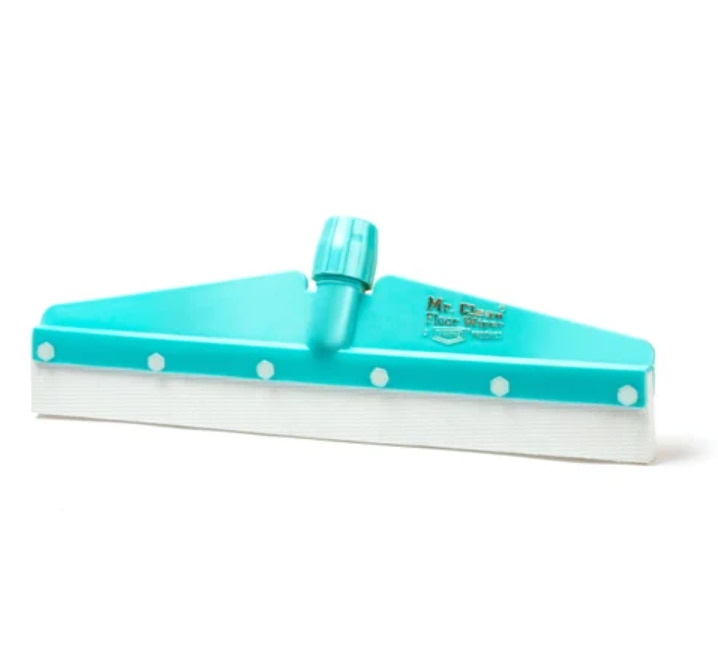 | Plastic Floor Wiper Approx. Price: Rs 108 / PieceGet Latest Price Product Details: Brand Unique Rod Material Iron Rod Length 106 CM Blade Length 40 cm Usage/Application... View product → |
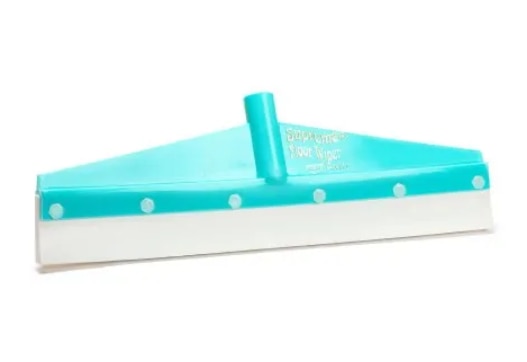 | Plastic Floor Wiper Approx. Price: Rs 102 / PieceGet Latest Price Product Details: Minimum Order Quantity 125 Piece Material Plastic Brand Unique Blade Material... View product → |
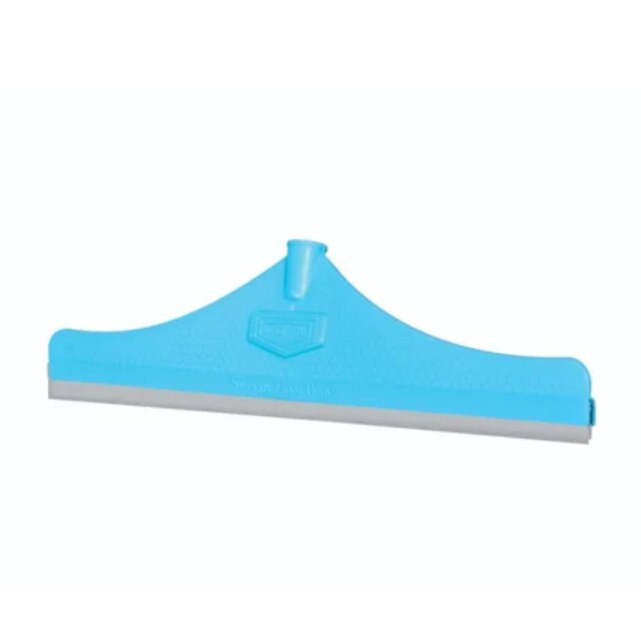 | Plastic Floor Wiper Approx. Price: Rs 132 / PieceGet Latest Price Product Details: Minimum Order Quantity 100 Piece Material Plastic Rod Length 125cm Blade Length 41 cm... View product → |