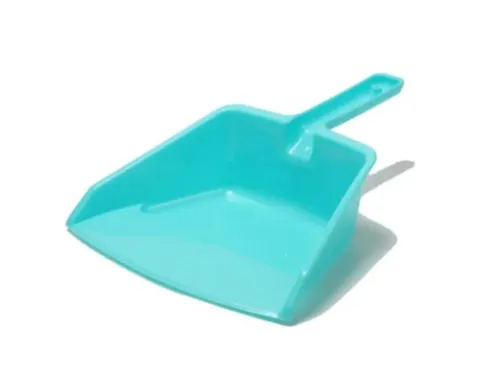
A pan-and-brush set only works well when the brush, floor-contacting lip, and handling method work together. You will learn how to sweep debris into the pan without scattering it, reach awkward edges safely, choose the right design for your floors, and check quality before ordering in quantity.
Key takeaways
- Keep the pan lip flat and sweep debris into a small pile.
- Use short angled strokes to clean corners without pushing debris deeper.
- Choose a long handle for reach and a flexible edge for better pickup.
- Check handle joints, bristle stiffness, pan material, and packaging before bulk orders.
How to Sweep Debris Into the Pan Without Spilling It
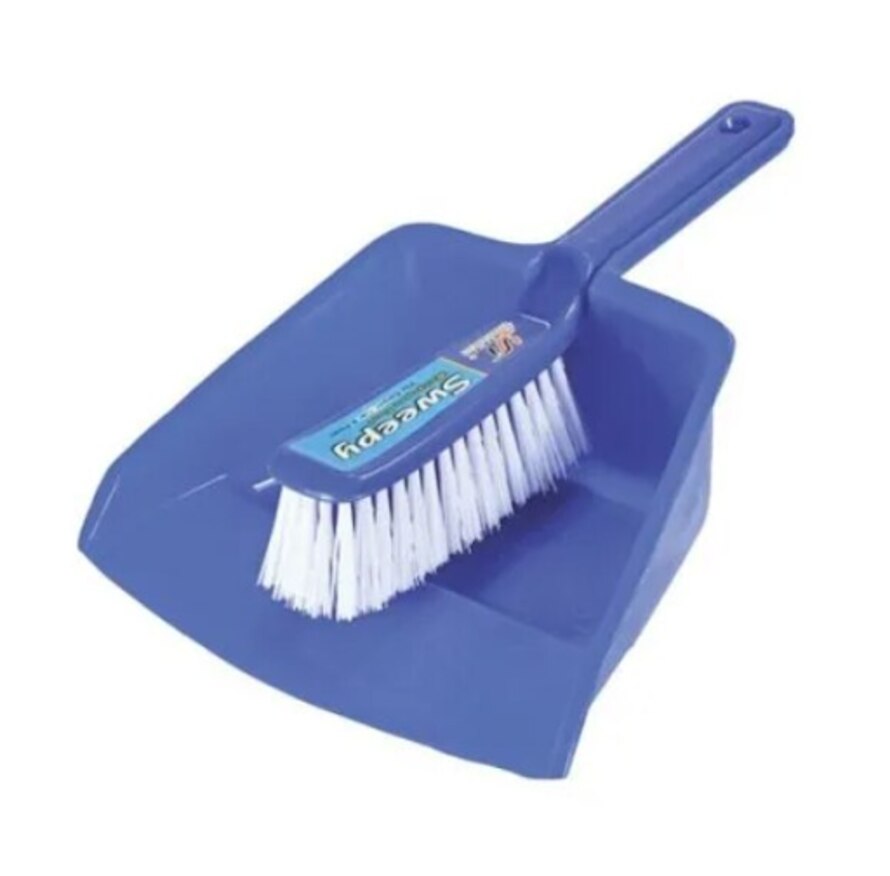
The cleanest floor debris collection starts with a small, compact pile rather than a wide sweep. A sweepy pan with brush works best when the pan edge stays in contact with the floor and the brush moves debris toward it in controlled strokes.
1. Hold the brush at a low angle and gather dust, hair, crumbs, and sand into a tight pile. Sweep from several directions instead of pushing everything in one long stroke.
2. Place the pan beside the pile, with its front lip pressed flat against the floor. Check for gaps; an uneven or lifted lip lets fine debris pass underneath.
3. Keep the brush head partly over the pan opening and push the pile across the lip with short strokes. Slow the final stroke so the bristles do not scatter material beyond the pan.
4. Repeat from the sides until the floor is clear. Use the brush tip to pull stray particles back toward the lip rather than chasing them with the pan.
5. Lift the pan smoothly after the pile is inside. Keep it level while carrying it; raised rear and side walls improve spill control, especially with lightweight dust.
6. Empty the pan close to the waste container, then tap the brush lightly over it. This dustpan and brush technique prevents a second trail of debris during disposal.
If the lip will not sit flat, stop and reposition the pan instead of forcing the sweep. A warped pan or curled edge defeats the method.
Cleaning Corners, Edges, and Tight Gaps on Different Floors
Push the brush into the junction where the floor meets the wall, then pull debris away from the skirting board before sweeping it into the pan. For skirting board cleaning, use the brush’s side rather than its tip; this reaches the narrow angle without gouging painted trim.
For corner cleaning, turn the brush diagonally so one end enters the corner. Gather dust outward in short strokes, then place the pan lip flat across the cleaned area. A flexible elastomer or TPE lip follows small floor irregularities better than a rigid edge, but inspect it for cuts, curling, or distortion before use.
Under furniture cleaning works best with the brush held at a low angle. Sweep debris toward an open side instead of forcing the pan beneath a gap it cannot enter.
On stairs, keep the pan supported on the step below and brush debris toward it; stair edge cleaning becomes unsafe when you stretch across several steps.
| Tile | Use soft or medium bristles; check the lip for grit that could drag across the glaze |
|---|---|
| Concrete | Use firm bristles for sand and larger debris; avoid a damaged pan edge |
| Vinyl | Use soft bristles and a clean, rounded lip to prevent scuffing |
| Laminate or wood | Use soft bristles and light pressure; trapped grit can scratch the finish |
| Carpet | Use a stiff brush for surface crumbs, but use a vacuum for embedded dust |
Test an inconspicuous spot first on polished, coated, or delicate flooring. Stiff bristles, sharp plastic seams, and sand trapped under the pan can leave scratches.
Design Details That Control Reach, Comfort, and Pickup
A long handle reduces repeated stooping, but a long lever also strains the pan-to-handle joint. Specify the joint construction, fastener type, and resistance to repeated loading rather than judging comfort by handle length alone.
| Specification | Effect on use | What to check |
|---|---|---|
| Pan opening size | A wider opening captures larger piles but adds carrying weight and bulk | Match the opening to debris size and storage space |
| Dustpan lip | A flexible edge maintains floor contact over small irregularities | Prefer TPE or rubber for smooth floors; inspect for curling, cuts, and permanent bends |
| Handle length and grip | More reach reduces bending; a shaped grip improves control | Check the working height, grip diameter, and non-slip surface |
| Joint and fastener | A weak connection loosens under the pan’s leverage | Require a threaded, riveted, or reinforced joint with a defined cycle or load test |
| Brush head width | A wider head clears floors faster but reaches corners less easily | Choose a head that fits skirting gaps and storage areas |
| Brush bristle stiffness | Soft fibres lift fine dust; stiffer fibres move sand and crumbs | Match stiffness to the floor and debris |
| Bristle material and flagging | Flagged synthetic bristles split at the tips and collect fine particles | Check PET or PP bristles for even flagging and low shedding |
| Storage clip and carry grip | A secure clip keeps the set together and stabilises lifting | Test the clip under repeated attachment and carrying |
Lift the pan only after the pile sits behind the dustpan lip. A reinforced pan body, balanced handle, and centred carry point reduce tipping; a warped pan or weak brush clip will spill debris despite good sweeping technique.
Defined acceptance limits for cracking, loosening, bristle loss, and lost floor contact are more useful than “heavy duty.”
When a Pan-and-Brush Set Is Better Than Other Cleaning Tools
A pan-and-brush set is the better choice for quick, dry spot cleaning where you need controlled pickup without plugging in equipment. It suits crumbs, hair, sand, and light debris around furniture, entrances, workstations, and corners.
| Option | What it does best | Choose it when |
|---|---|---|
| Pan-and-brush set | Collects a small pile precisely and stores as one unit | You need fast, quiet cleaning in tight areas |
| Long-handled lobby dustpan | Reduces stooping and holds more debris | You clean large public or commercial floors repeatedly |
| Broom and dustpan | Covers broad areas faster with a larger sweeping arc | You need routine floor sweeping rather than close edge work |
| Vacuum cleaner | Removes fine dust and hair with stronger containment | Fine particles, carpet, or deep cleaning matter more than setup time and noise |
| Handheld brush | Reaches narrow gaps and small surfaces directly | You are cleaning shelves, steps, upholstery, or a tiny spill |
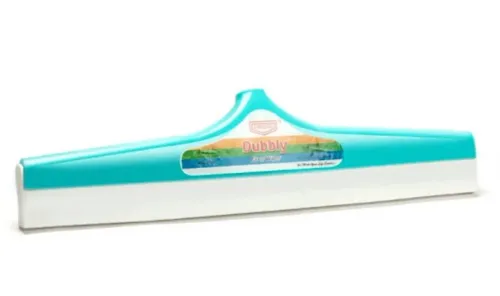
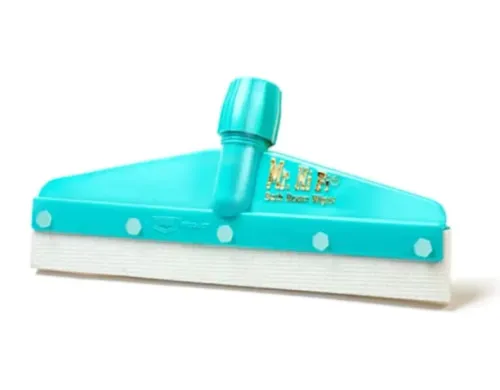
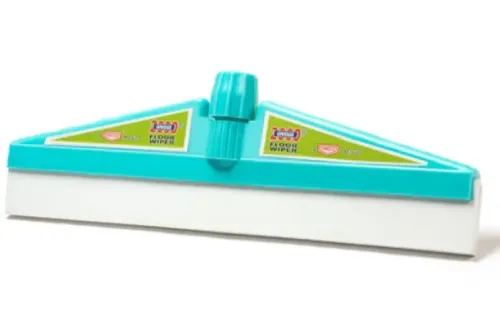
| Floor wiper | Spreads or removes cleaning solution and wet residue | The problem is a spill or film, not loose dry debris |
The vacuum cleaner comparison changes on carpet: suction reaches particles that a brush may leave embedded, while the pan set wins for a few visible crumbs on a hard floor. A long-handled lobby dustpan saves your back but needs storage space and a joint that tolerates repeated loading.
Choose the pan-and-brush set when speed, portability, and precise pickup outweigh capacity.
Bulk-Buying Checks for Reliable Cleaning Sets
A bulk cleaning tool purchase should be approved against a written sample and failure limits, not a vague “heavy duty” claim. Ask the supplier to document the following before confirming the lot:
1. Inspect pan rigidity, the floor-contact lip, and nesting fit. Reject samples with a warped pan, an uneven edge, rocking on a flat floor, or a lip that leaves visible gaps. Specify the maximum acceptable deformation after stacking and transport.
2. Test handle joint strength with a defined repeated-load cycle. Record the joint design, fastener type, handle length, and the load applied at the pan-to-handle connection. Long handles reduce stooping but increase bending force at this joint.
3. Check brush performance after repeated use. Measure bristle retention, brush-block attachment, storage-clip retention, and floor contact after a stated number of sweeping and clip-insertion cycles. Set limits for bristle loss, loosening, cracking, and separation.
4. Define colour coding in your purchase order. Require the same approved colour on the pan, brush block, handle, and replacement parts; no universal colour scheme covers every cleaning operation.
5. Assess cartons as a distribution system. Specify an ASTM D4169 or applicable ISTA protocol, then inspect handles, pan lips, clips, and brush blocks after drop and vibration testing.
6. Use an incoming inspection plan based on ISO 2859-1. Set critical and major defect limits, sample by lot, and record warped pans, loose threads, weak clips, bristle shedding, and cosmetic damage separately.
Unique Trading Company can be asked to provide pre-production samples against these acceptance criteria rather than relying on catalogue descriptions.
Related products
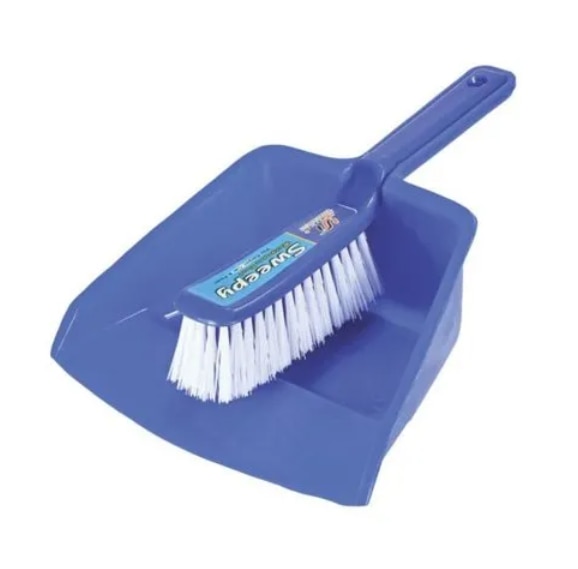 | Dust Pan Approx. Price: Rs 114 / PieceGet Latest Price Product Details: Minimum Order Quantity 100 Piece Color Blue Material Plastic Brand Unique Model Number... View product → |
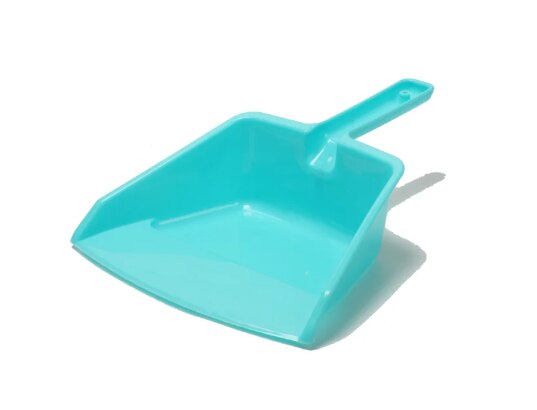 | Dust Pan Approx. Price: Rs 40 / PieceGet Latest Price Product Brochure Product Details: Minimum Order Quantity 125 Piece Color Blue Material Plastic Brand... View product → |
Frequently asked questions
How do you sweep debris into a pan without spilling it?
Make a small pile, place the pan edge flat against the floor, and use controlled strokes toward the lip. Hold the brush low when moving fine dust.
How do you clean corners, edges, and tight gaps with a sweepy pan and brush?
Use the brush tip and short angled strokes to pull debris out of corners and along skirting boards. Adjust pressure for the floor surface so bristles reach gaps without scattering dust.
Which design details affect reach, comfort, and pickup?
Check handle length, grip shape, joint strength, bristle stiffness, pan-lip flexibility, pan depth, and the weight of the complete set.
When is a pan-and-brush set better than other cleaning tools?
It suits quick collection of dry debris without electricity, especially around edges and in small areas. Use a vacuum for embedded dust or large carpeted areas, and a mop for wet soil.
What should you check before buying sweepy pan and brush sets in bulk?
Inspect sample sets for stable joints, aligned bristles, a floor-contacting pan lip, durable material, consistent dimensions, and protective packaging before approving the full order.
Related product
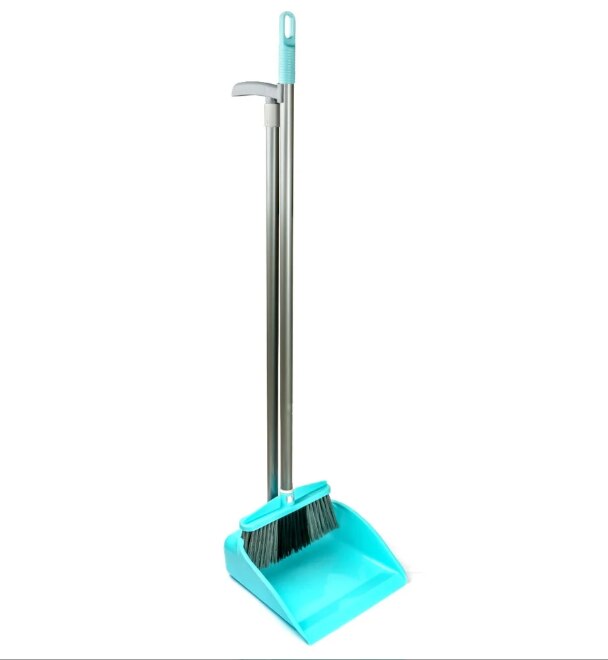 | Dust Pan Approx. Price: Rs 294 / PieceGet Latest Price Product Brochure Product Details: Minimum Order Quantity 100 Piece Color Blue Structure Open Top... View product → |