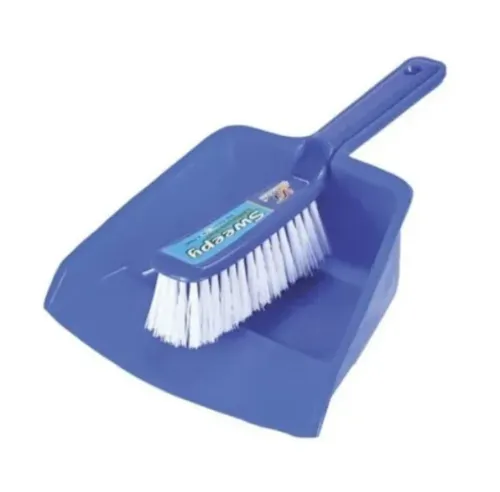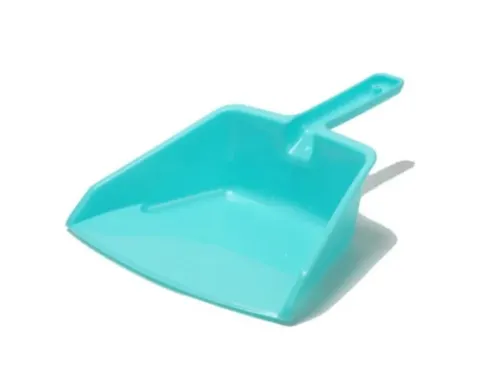
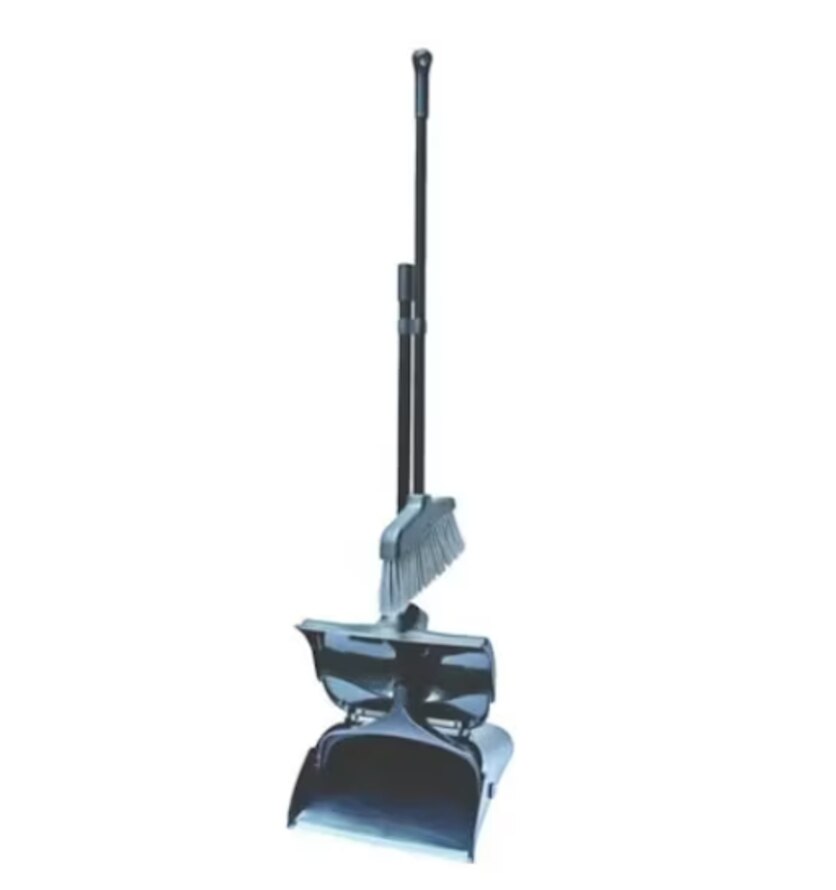
Large floors become inefficient when every debris pile requires a deep bend, a short reach, and a separate trip to the bin. You will be able to judge the walking dust pan’s practical convenience by its operating method, floor contact, capacity, dimensions, and fit with your cleaning equipment.
Key takeaways
- Sweep debris into controlled windrows before collecting it.
- Work in lanes toward one discharge point.
- Check floor type, debris volume, tray capacity, and clearance.
- Choose a walking pan when mobility matters more than powered suction.
How to Use a Walking Dust Pan Across a Large Floor
For large-area cleaning, use the walking dust pan as the collection point for a controlled windrow, not as a substitute for sweeping. Work in lanes toward one discharge area so each pass moves debris closer to the pan instead of scattering it.
1. Inspect the pan mouth, front lip, wheels, and handle. Remove debris trapped beneath the lip, then confirm the front lip flush with floor before starting.
2. Stand behind the pan and place its broad opening across the end of the first windrow. Keep the pan square to the floor; tilting it lifts one corner and leaves a trail behind.
3. Sweep dry debris toward the pan mouth from both sides. Use short strokes that finish inside the opening, rather than striking the pan and bouncing the load away.
4. Advance the pan only after the current pile has entered the tray. Keep the lip in contact with the surface as you walk, and overlap the next sweeping lane slightly so no strip remains between passes.
5. Stop when the tray reaches its safe working load. Do not compress the waste until it spills over the mouth, because a full tray scatters debris during turns.
6. Travel to the disposal point along the clearest route. Tilt or open the pan slowly over the container, keeping the mouth inside its rim, then check the lip and wheels before returning.
Use this method for dry waste. Wet debris can stick inside, add weight, foul moving parts, and scatter during emptying unless the pan is rated for wet collection.
Where the Design Saves Effort—and Where It Still Requires Work
The main saving is reduced stooping, not faster sweeping. A walking pan keeps the collection point near hand height, so you remain upright while guiding the broom and moving the pan along the windrow.
Walking dust pan | Short-handled pan Bending | Less frequent and shallower bending; the handle keeps the pan at floor level without crouching | Bending at nearly every pickup, especially after each small windrow Hand position | One hand controls the broom while the other holds a handle near the waist or hip | One hand holds the broom; the other repeatedly reaches down to lift, place, or steady the pan Walking distance | Push or carry the pan beside the sweeping route, reducing stops to reposition it | Walk back to the pan after each sweep section, then carry or drag it to the next section Collection cycles | A deeper tray can hold more debris before emptying, but capacity—not the handle—determines the count | Smaller trays fill sooner, creating more emptying cycles
The broom still does the sweeping. Broom compatibility matters: a head wider than the mouth forces you to compress the windrow before loading it, adding passes and effort.
You still need to:
- Keep the pan lip flush with the floor.
- Push or carry a loaded pan to the disposal point.
- Empty it before debris reaches the hinge or upper rim.
- Clean the lip, wheels, and hinges after use.
Overfilling increases pushing effort, causes spills during walking, and can stop the lid closing or the pan standing upright.
How Floors, Debris Types, and Load Size Affect Performance
A walking dust pan performs best on firm, mostly level floors with dry, loose waste. Smooth tile, vinyl, sealed concrete, and warehouse floors let the mouth stay close to the surface; small wheels still catch on grout lines, expansion joints, and broken paving.
| Surface or waste type | Performance | Main problem |
|---|---|---|
| Smooth tile or sealed concrete | Clean contact and easy rolling | Debris trapped under a warped lip |
| Rough concrete | Handles larger areas | Gaps under the lip let grit escape |
| Tile grout | Works when wheels and lip clear joints | Small wheels can snag or bounce |
| Carpet edges | Collects surface litter | The mouth can catch or leave debris behind |
| Entrance mats and thresholds | Useful for dry, visible waste | Wheels stop or spill the load at the rise |
| Dry paper, leaves, and dust | Best-suited material | Lightweight pieces can blow or scatter |
| Heavy broken material | A rigid pan supports the load better | Flexible plastic can flex, scrape, or deform |
| Wet or sticky waste | Usually unsuitable | It sticks, adds weight, and fouls hinges |
Empty the tray before waste reaches the hinge, lid, or upper rim. An overfilled tray becomes harder to push, spills during turns, and may stop the lid closing or the pan standing upright.
Keep both wheels on the floor and push squarely into the pile. A loose handle joint, clogged wheel, lifted corner, or debris beneath the lip can make this tool slower than a hand pan. Flexible lips seal uneven floors better; rigid pans carry heavy debris better.
What to Measure Before Choosing a Walking Dust Pan
Mouth width and usable tray depth decide whether the pan suits your broom and debris volume. Measure the broom head at its widest point; a narrower mouth forces you to compress each windrow before loading it, adding passes instead of saving work.
| Check | What to measure | Failure it prevents |
|---|---|---|
| Mouth width | Clear opening, not the outside frame | Broom overhang, missed debris, and extra passes |
| Tray depth and capacity | Usable depth, empty weight, and rated load | Tipping, difficult lifting, and misleading nominal capacity |
| Handle height | Grip height for each operator and total stored height | Stooping, awkward wrist position, or blocked storage |
| Wheel diameter and clearance | Wheel size, axle movement, and space beneath the pan | Catching on grout, thresholds, mats, joints, or rough paving |
| Lip and frame | Lip flexibility, floor contact, welds, bends, and corrosion | Gaps on uneven floors and early structural failure |
| Closure and moving parts | Flap travel, hinge access, wheel fastening, and tool-free cleaning | Jams caused by hair, string, wet waste, or dust |
| Storage | Whether it stands upright without tipping and has a hanging point | Unstable parking or wasted floor space |
Test the pan on your actual corridor, warehouse threshold, entrance mat, or outdoor paving with a loaded tray. Ask for replacement wheels, hinges, lips, and closure parts before ordering; Unique Trading Company can provide the supplier discussion point for a bulk purchase.
Reject any model whose rated load is unclear or whose closure cannot be cleaned without dismantling the pan.
Related product
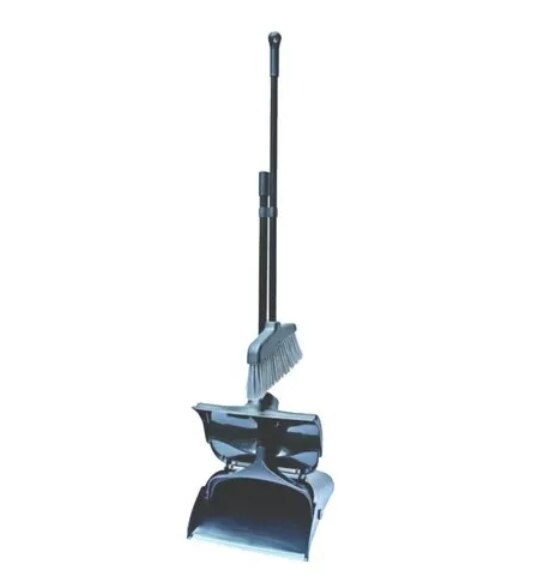 | Dust Pan Approx. Price: Rs 585 / PieceGet Latest Price Product Details: Minimum Order Quantity 50 Piece Color Black Brand Unique Automation Grade Manual... View product → |
When It Beats a Hand Pan, Vacuum, or Sweeping Machine
A walking dust pan wins when you need repeated dry pick-up across a floor but do not need powered collection. Compare the options by debris, area, access, and setup time—not by handle length alone.
| Option | Main advantage | Best fit | What can make it the wrong choice |
|---|---|---|---|
| Walking dust pan | Upright collection without repeated bending | Dry litter, leaves, packaging scraps, and swept windrows in corridors, offices, and warehouses | A broom wider than the mouth, rough gaps under the lip, or an overfilled tray causes extra passes and spillage |
| Long-handled lobby dustpan | Similar upright posture with simple manual handling | Small, frequent clean-ups around entrances, counters, and aisles | Its narrower opening and smaller capacity slow large-area work |
| Short dustpan | Low cost and precise edge control | Stairs, low furniture, tight corners, and occasional spot cleaning | Repeated stooping makes many collection cycles tiring |
| Vacuum cleaner | Captures fine dust and debris without forming a windrow | Carpet, upholstery, floor edges, and dust that a broom leaves behind | Cords, battery charging, noise, filters, and wet debris can limit use |
| Sweeping machine | Covers broad hard-floor areas with rotating brushes | Long, open floors where manual sweeping takes too many passes | It needs turning space and does not replace detail collection at edges |
| Mechanised sweeper | Fastest coverage for extensive sites | Warehouses, car parks, and large paved areas with regular maintenance schedules | Purchase, charging or fuel, servicing, and access requirements outweigh its benefit in small spaces |
Choose the walking pan for flexible, power-free collection between larger cleaning runs. Empty it before waste reaches the rim or hinge.
Frequently asked questions
How should you use a walking dust pan across a large floor?
Sweep in parallel lanes, form a controlled windrow, and guide each lane toward one discharge area. Use the pan as the collection point rather than a replacement for sweeping.
Where does a walking dust pan save effort?
Its upright, mobile design reduces repeated bending and carries collected debris across the floor. You still need to sweep debris into its path and empty the tray.
Which factors affect walking dust pan performance?
Floor texture, debris type, debris volume, tray capacity, wheel movement, and the size of the collection opening affect performance.
What should you measure before choosing one?
Measure aisle and doorway width, storage space, collection-tray capacity, handle height, wheel clearance, and the distance to the disposal point.
When is a walking dust pan better than a hand pan, vacuum, or sweeping machine?
It suits large dry areas where you want faster collection with less bending but do not need powered suction. Use a hand pan for small spills, a vacuum for fine or embedded debris, and a sweeping machine for larger powered cleaning operations.